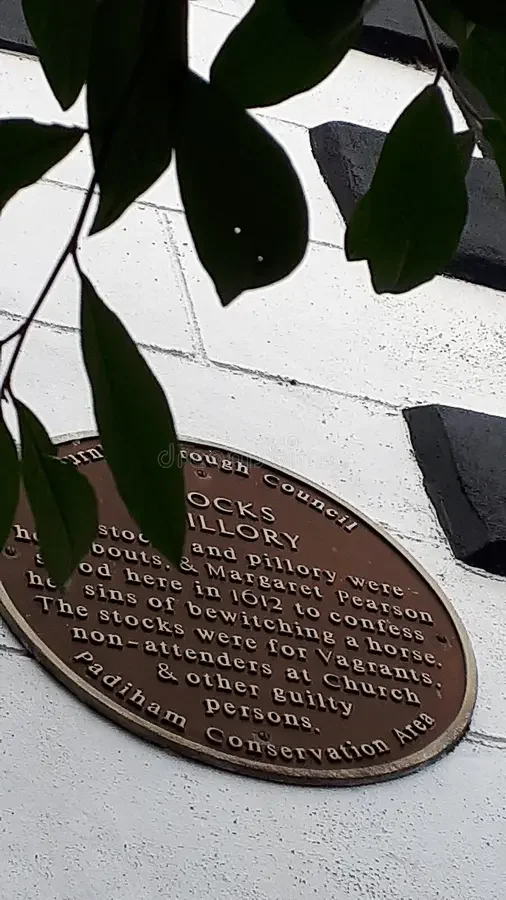
The Padiham Witch
Padiham, Lancashire 1612
“You shall stand vpon the Pillarie in open Market, at Clitheroe, Paddiham, Whalley, and Lancaster, foure Market dayes, with a Paper vpon your head, in great Letters, declaring your offence”
You may have heard of the notorious Pendle Witches, but did you know that the witches of Pendle were not the only ones to go to trial in 1612? Alongside the Pendle Witches stood Isabel Robey from Windle, the Samlesbury witches and Padiham’s own Margaret Pearson.
Padiham was one of the areas in which Nicholas Bannister was Justice of the Peace, the same Nicholas Bannister who accompanied Roger Nowell of Fence to take the Device Family (part of the Pendle Witches) to trial. It has been said that Nowell had convinced Bannister to bring other witches to this same trial, which resulted in Margaret Pearson’s journey to Lancaster Gaol.
At this point, Margaret Pearson had already been tried twice for witchcraft. Once for the accusation of murder and another for bewitching a neighbour, and she had been acquitted on both occasions. I can’t help but feel that Pearson would start to think this was personal…
The reason for her joining the Pendle Witches for yet another trial was on the charge of killing a mare belonging to a Mr Dodgson of Padiham. Anne Whittle, one of the Pendle Witches, was brought into the court to give evidence against Pearson. She said that Pearson was a witch with a cloven-footed spirit, they had both climbed through a hole in the roof of Dodgson’s barn and had sat upon the mare until it died.
Whittle claimed that Pearson had told her she had bewitched Childer’s wife and child to death, adding that “… the said Pearson’s wife is as ill as she.” Evidence from Jennet Booth was then presented to Bannister on August 9th. Booth told how she had gone to Pearson’s house to card wool and had asked for some milk for her child, Pearson agreed and put a pan on the fire to warm the milk. As she took the pan from the fire “…there came a Toade, or a thing very like a Toade,” which Pearson lifted up with tongs and put outside…
Despite the fact that none of these claims seemed very legitimate, Margaret Pearson was found guilty of witchcraft, but as her offence had been against material goods, rather than people, her sentence was as follows:
“You shall stand vpon the Pillarie in open Market, at Clitheroe, Paddiham, Whalley, and Lancaster, foure Market dayes, with a Paper vpon your head, in great Letters, declaring your offence, and there you shall confesse your offence, and after to remaine in Prison for one yeare without Baile, and after to be bound with good Sureties, to be of the good behauiour.”
We have to remember that Pearson won’t have had an uber taking her between Clitheroe, Padiham, Whalley and Lancaster. So the gruelling twenty mile walk, four days a week, between those places just to be publicly ridiculed was no easy sentence. Pearson was required to stand in a locked pillory for six hours at a time with her head and hands secured by boards. Locals would probably congregate to throw rotten fruit at her, hurl insults, humiliate her.
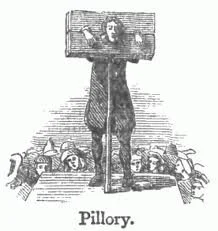
This was followed by a year in prison, which whilst I’m sure Pearson appreciated not having to walk so much anymore, still probably was pretty awful to endure. Even though Margaret did survive her trial, the hell she went through after continues to exemplify the injustice women faced in the 1600s.

Sources
Clayton, John A. (2007), The Lancashire Witch Conspiracy, Barrowford Press
https://from-bedroom-to-study.blogspot.com/2012/07/yet-more-trials-and.html
Potts, Thomas (1613), The Wonderfull Discoverie of Witches in the Countie of Lancaster.