Katie Ness: Historian, Poet and Folklorist
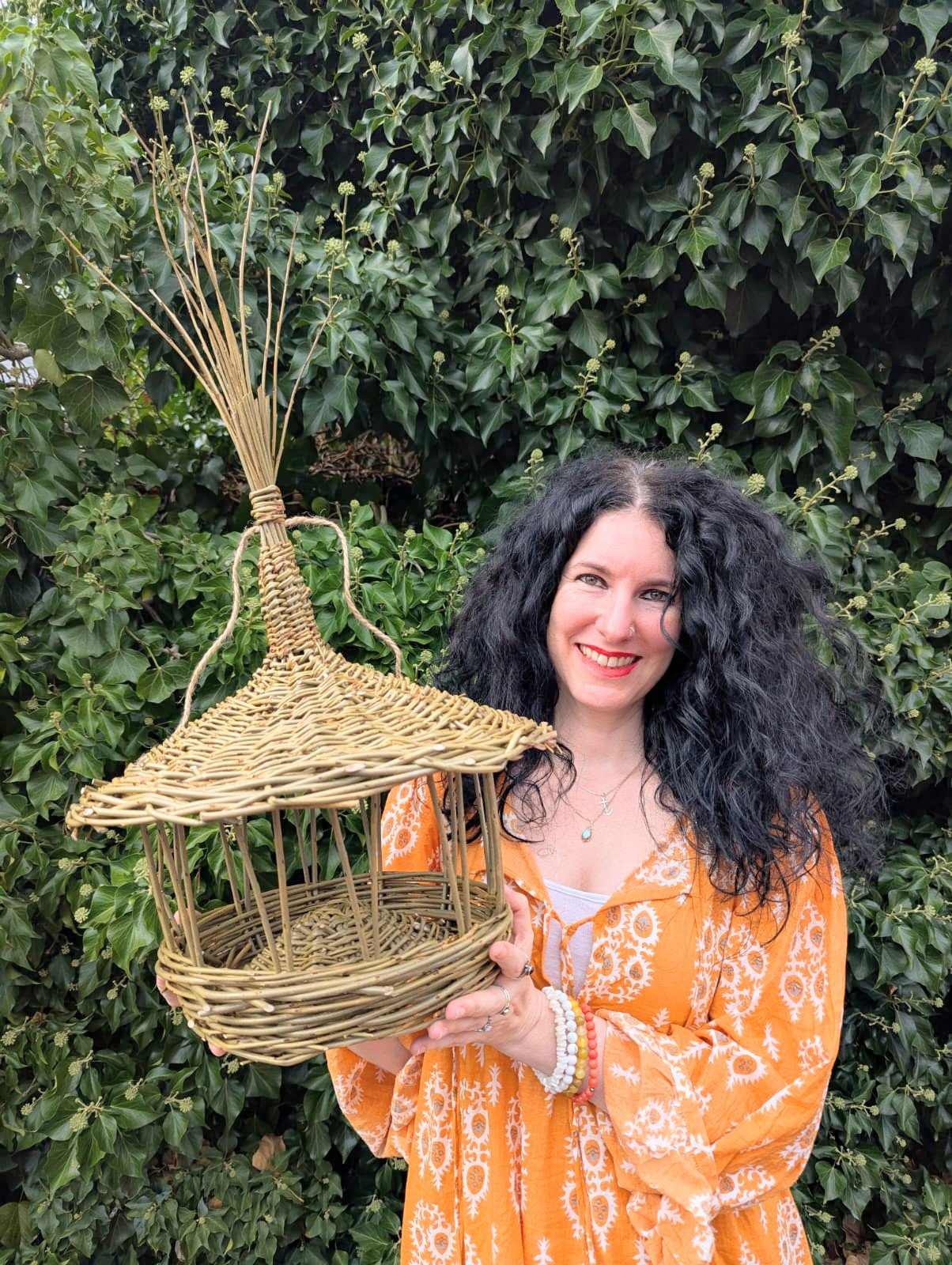
Katie Ness is a budding historian and Folklorist, originally from a coastal Lancashire town and now living in London. With a BA HONS in Fine Art and level 4 CPDs with Oxford University in Prehistoric Art, A History of Folklore, The Practice of Magic in Medieval Society and Death & Devotion: The Art of Death in the Middle Ages, Katie is studying towards becoming a social historian of all things magical, esoteric and folkloric.
We had the chance to chat to Katie about academia being a large part of her life, how her writing projects help to explore who she is and the connection between folklore, women's history and movement of the body.
Northern Folklore Archive: You have quite the education behind you: BA HONS in Fine Art and studies in Prehistoric Art, A History of Folklore, The Practice of Magic in Medieval Society and Death & Devotion: The Art of Death in the Middle Ages! Has academia always been such a big part in your life, were you studious as a child?
Katie: I grew up in a small Lancashire coastal town and whilst I’m proud of where I’m from, not much happens there– unless you’re a tourist along the seafront. From an early age I was encouraged by my grandmother to read books which was the beginning of my path into world building and expansive knowledge. I was a very quiet, introspective, curious and mystical child, my mum tells me I’d hide behind her legs whenever I was in a social gathering but that she’d see me quite happy alone with my nose in a book, painting or day dreaming, making magical rose water, writing poetry in the botanical gardens or building a little altar in my bedroom with junk and natural objects. I’ve not changed!
And I’ve always been a seeker as well, a seeker of knowledge that I now know to be esoteric and whether through philosophical poetry, a painting inspired by a dream, spiritual practice or academic scholarly books, I’ve always been a seeker of the liminal in some way, as though everything I study just adds a piece to the giant puzzle we call life. My mind is very expansive, so I don’t study for academic prestige (although that’s a bonus), I garner all this wisdom to continue expanding my consciousness and to weave multiple threads together to take a step back and see how everything is connected like a huge tapestry.
My BA Hons in Fine Art is the root from which everything else grew from, at my core I am an interdisciplinary artist and I find myself pondering why us humans have this intrinsic need to craft with our hands for devotional intention and magical thinking? Whether that’s folkloric costumes and stories, poppets and corn dollies, apotropaic amulets, masks, icon art, mystical poetry, basket weaving, sewing sigils into textiles or symbolic imagery on pottery and stone. From prehistoric cave art for ritualistic and shamanic purpose, ancient poetic hymns to deities and local folk customs to honour seasons and ward away the devil—it is all both beautifully strange and utterly human.
The recent short courses I did with Oxford university on Prehistoric Art, A history of Folklore, The Practice of Magic in Medieval Society and Death & Devotion: The Art of Death in the Middle Ages, all explore the social history of human creativity for magical and mystical intention. These courses act as bridges for my upcoming MA which I hope to study in 2027 to become a social historian of the occult and folklore. Ultimately who I’ve always been as a person, will be who I am in my career path—A witchy Historian! And I find this incredibly satisfying that I never faltered from staying true to myself, no matter what life (and people) threw at me.
So, yes academia has been a big part of my life’s trajectory and I was a very studious child as I LOVE knowledge but its to plug into something bigger than me, to try and download as much wisdom as possible before I die so I can ponder the meaning of it all and in the end realise the scope of it is so vast, that really I know nothing and I’m just a minute speck on a tiny marble floating through space time continuum and I’m just here for the ride—to live, learn, love and laugh (that is so cringe but it’s true).
As well as your book Word Witchery, you also write poetry. Do you find writing to be the best medium to express yourself? Does your writing projects help you to explore who you are and your place in the world?
Word Witchery was a natural progression from my two poetry collections, but it also grew out of a deeper research fascination. I began looking at archaeological and historical traces of poetry from prehistory through ancient civilizations, the Medieval period, the Renaissance and even 19th century occult societies—exploring how language was used with intention, invocation and ritual significance. Alongside that, I became deeply interested in folklore and oral traditions—how spells, charms, laments and incantatory verse were carried through generations, long before they were formally recorded. That folkloric thread: the idea of poetry as communal memory and embodied practice became just as important to me as the literary canon.
I’ve been writing poems since childhood and during my Fine Art degree my installations frequently incorporated my poetry through sound and visuals. Literature and art have always moved in parallel for me. Since 2020 I have been published in national and international anthologies, and my collections Aphrodite Fever Dream and Juggernaut explore very different emotional terrains—from nature-based dreamlike longing and summer love to the enormity of grief expressed through metaphors of space, galaxies and time. I am currently working on a 3rd collaborative poetry book.
The research for Word Witchery actually began during recovery from surviving an ectopic pregnancy at the end of 2020. Having lost the pregnancy, my fallopian tube and almost my life, writing steadied me during this heartbreaking, sensitive and tumultuous tide. I found myself asking questions that widened outward: How far back does poetry go? How has it functioned in ritual or spell work across cultures and time? Where are the women mystics, priestesses and bardic poets in our recorded histories? My book is a bridge between worlds—allowing contemporary pagans to commune with the ancient voices of the past with something so deeply intrinsic yet magical to all of us even today: breath, utterance, symbols, words, language, poetry and writing.
Currently I’m deepening my learning in Sanskrit with my guru, Lakshya Devi in order to chant mantra and spiritual poetic verse correctly and I’ll soon begin learning Persian (Farsi) with teacher Layla Shams. My goal is to connect more directly with the rich poetic traditions of these cultures, to read their text in original language and to better understand their philosophy and mystical thought. I’m also learning Italian on Duolingo, primarily to access Italian poetry and books on Sicilian and Sardinian folklore that aren’t available in translation.
So yes—writing (and creativity in general) is absolutely the medium through which I understand myself and my place in the world. It allows me to move between the personal and ancestral, between lived experience and inherited myth, between the waking and the dreaming of the liminal. For me, poetry is not only an expression—it is continuity…It’s a thread.
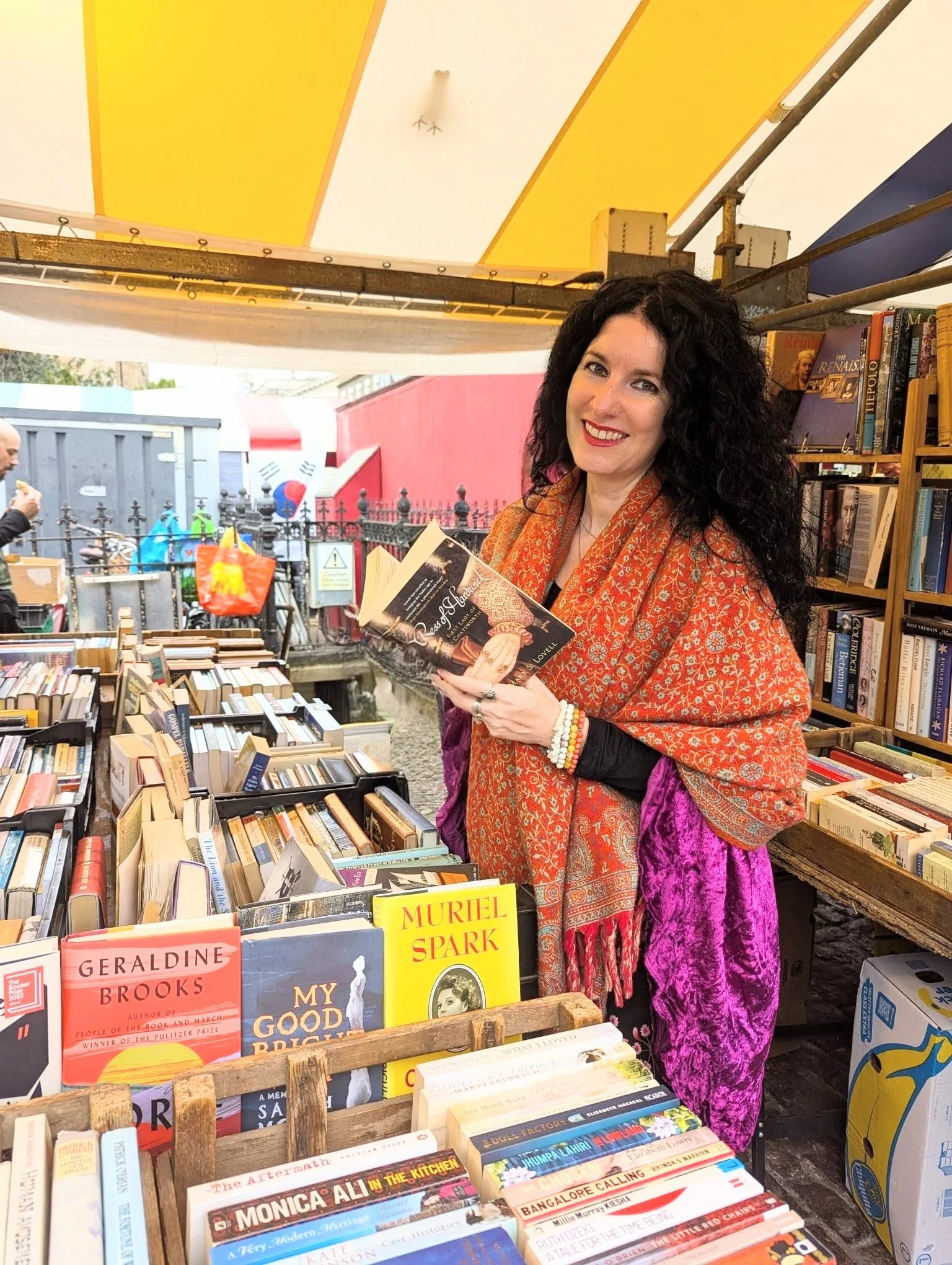
You also teach Yoga and advocate for women's wellness. Do you find there to be a connection between folklore, women's history and movement of the body?
Yes very much so—and I see the connection as both historical and deeply incarnate. Yoga, as its often presented in the West, is reduced to posture and physical discipline like Pilates. But traditionally, it is an entire cosmology and way of life as opposed to just a fitness praxis. It carries philosophical poetry, mythic narratives, devotional hymns, esoteric ideas and symbolism and spiritual psychology. The Yoga Sutras, the Bhagavad Gita and Tantric or Devi (Goddess) texts—are not merely instructional manuals or pretty stories; they are mythopoetic frameworks for understanding consciousness. Yoga and Hindu philosophy have its own folklore and customs and its own symbolic language through which spiritual knowledge has been preserved and transmitted across centuries.
That idea of transmission is central to my academic research—both with Oxford University and Oxford’s Centre for Hindu Studies. I’m fascinated by how wisdom survives—not only in archives, but through oral tradition, ritual gestures, seasonal customs and embodied practice. Folklore is rarely abstract; it is lived. It is sung, chanted, danced, woven into fabric, carried in the hands and in the body.
When we consider women’s history, this becomes even more profound. So much of women’s spiritual and cultural knowledge was never formally codified within institutional and patriarchal power structures. Instead, it is lived in midwifery, herbalism, folk patterns on clothing, stories, domestic rituals, lullabies, protective charms, seasonal recipes, traditional craft, goddess stories and women’s spaces (Red Tents and birthing huts). These practices are often dismissed as unimportant or superstition, yet they are deeply sophisticated and sincere in their symbolic and communal function. These were lived and intrinsic epistemologies—ways of knowing through the body.
And yoga, particularly when taught with sensitivity to women’s wellness, can be understood as part of that lineage. It becomes less about achieving an external shape and more about attuning to cyclical rhythms—breath, hormonal shifts, seasons, grief, renewal. The body becomes not an object to master, but a living essence, a living ritual. In both folklore and yoga, the body is not separate from spirituality; it is the vessel through which spirituality is experienced.
From a scholarly perspective, I’m interested in this intersection between mysticism and social history: how belief systems shape daily life, how ritual shape identity, and how communities encode metaphysical understanding into ordinary practice. From a mystical perspective, I see a continuity—an ancestral thread—connecting ancient hymns, village customs, devotional movement and modern women gathering in a yoga space seeking reconnection. I research a lot about ancient priestesses, wise women and oracles to better understand the lineage of women’s wellness that I am a part of—its evolved into something new in the 21st century—the temples are gone but we have yoga studios and wellness centres instead. I’d like to bring the old knowledge back into these modern spaces—to be a bridge between worlds I suppose.
So yes, I find relationship between folklore, women’s history and bodily movement incredibly rich. They all ask the same underlying question: How do we carry wisdom across generations? And how does the body remember what history sometimes forgets? For me, practicing yoga and researching folklore are not separate vocations– I personally chant goddess mantra every day at my altar– this is a yoga practice in its own right, these mantras are thousands of years old and still part of Yogic/Hindu life too, as living and breathing folk customs. So yoga and folklore can be parallel expressions of the same devotion—understanding how human beings, and particularly women, embody and interact with the sacred and the magical.
I also think many women today feel a longing to reconnect with what are often called “the old ways”—not necessarily as nostalgia, but as an act of reclamation. For some it’s about ancestral sovereignty, for others it’s about recovering forms of knowledge that were marginalised, dismissed or suppressed.
Who doesn’t want to learn the history behind an ancient spell-poem they’re about to practice in the cosiness of a women’s circle? Therefore it is important to me to make sure I have that historical grounding as a teacher because then my classes are imbued with truth and integrity.
Also, the yoga I have specialised in teaching is yoga nidra—the yoga of sacred rest and dreaming as well as specialising in the philosophies of yoga too. Yoga Nidra is another name for dream incubation, which again is a practice that is thousands of years old from many cultures. I teach (and research) beyond the veil and beyond western stereotypes associated with the asanas or TikTok trend-based mysticism. My personal goal is to be a social historian of the Occult Sciences and Folklore as my primary job throughout the year, and the yoga wellness practicalities to be facilitated during the summer months as day and weekend retreats.
For me, it’s about honouring the physical discipline of yoga while also acknowledging its mythic, poetic and devotional dimensions. It’s about creating space for women to reconnect with their bodies not as projects but as sites of intuition and memory.
Do you hope that your written and creative projects will help women to reconnect with their folk traditions and perhaps find a little solace in our (insanely hectic!) modern society?
I hope so—though I would never presume to lead anyone back to something that is already theirs. What I hope my work does is create doorways.
We live in a culture that is relentlessly fast, hyper-digital and often disconnected from cyclical time—from seasons, from land, from ritual pause. When was the last time we paused to write a letter? Or write a poem dedicated to a river we walked past? Or spent a moment contemplating life or those who came before us whilst watching the clouds? Many people feel that dissonance in their bodies long before they can articulate it.
Theres a quite fatigue that comes from existing in constant acceleration. Creativity in all forms, including folk customs and craft—storytelling, poetry, basketry, textiles, painting, mask making, traditional communal arts—evolved precisely to help communities metabolise life—giving structure to grief, celebration, birth, harvest and death. They slowed time, marked thresholds, helped us make sense of the world, bring folk together, prevent boredom and encourage a sense of joy and purpose—they remind people that they belong to something older and larger than the immediate moment.
If my written and creative work can offer even a small reminder of that continuity—that we are not the first to feel overwhelmed, to grieve, to love fiercely, to seek meaning—then yes, I would consider that meaningful. And I want to inspire others to consider writing that poem or story, finish that painting, try that dance style—humans are creative by nature, carve out time for creativity and don’t let naysayers tell you it’s a waste of time. It’s your life and life is short but creativity and folk traditions continue because of our shared practices. So, fill your life with colour, joy and meaning.
I do want to emphasize that I am also careful not to romanticise the past. Folk life was often harsh, precarious and shaped by survival. What I’m interested in is not re-enactment, but resonance—human beings since prehistory right up to our current ecological and political climate have turned to creativity and rituals during absolute abject horrors, it is how we survive during our most painful moments—you only have to see the viral stories and creative videos we made during the pandemic to understand that.
If someone reads my work and feels inspired to light a candle and write a devotional poem to an ancestor or the spirit of a river or simply slow down and journal by a tree—then that is enough. Solace doesn’t always arrive as grand transformations. Sometimes it’s just the quiet reassurance that we are part of a long line of people who have always created meaning in the midst of chaos—and I find that is incredibly beautiful and tender.
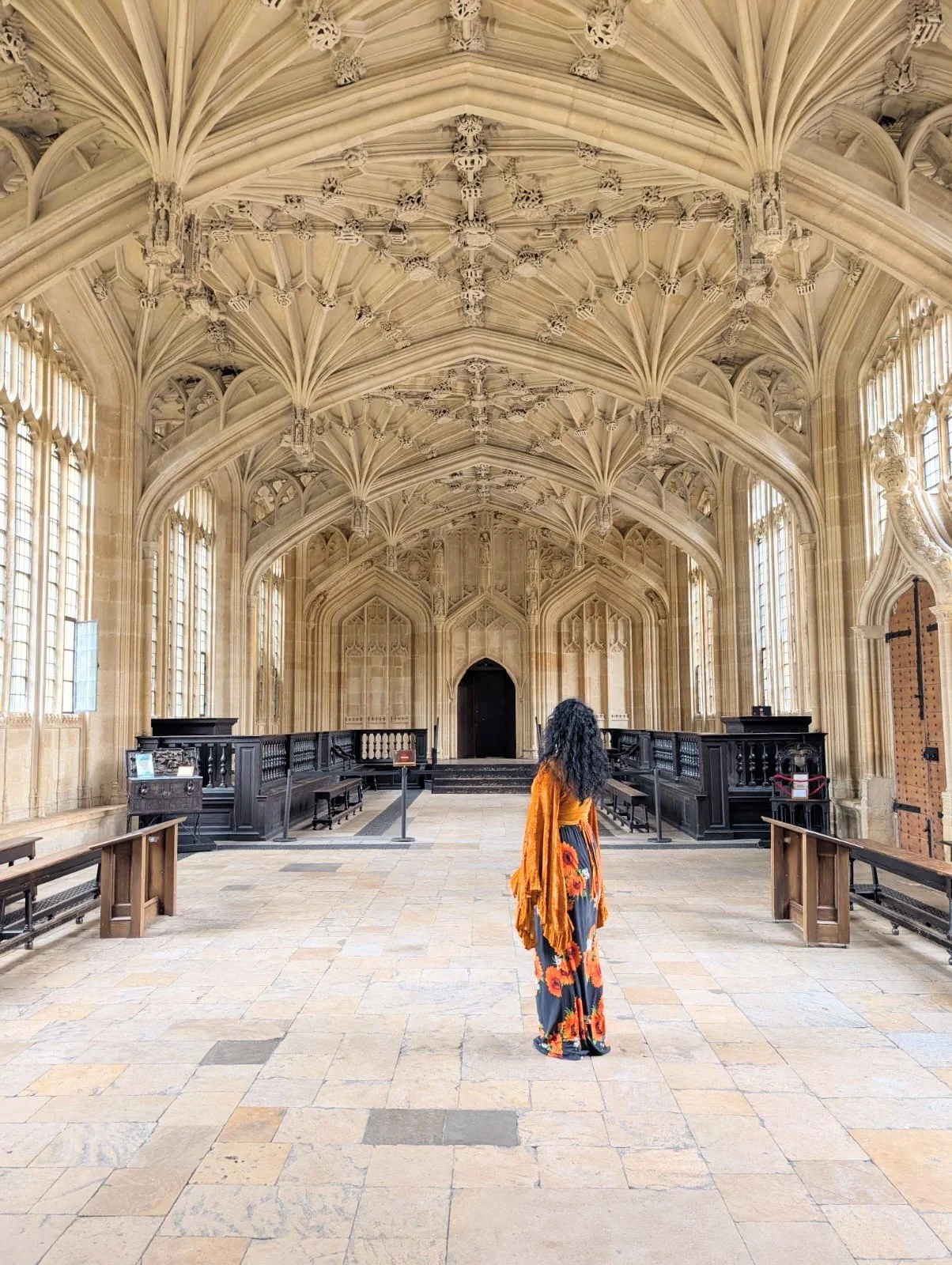
Lastly (and I'm asking this to everyone) one of the Northern Folklore Duo is a huge film fan, so this question is purely for him... what is your favourite film?!
Oh gosh, I really can’t just pick one! But some of my favourites include:
● Cloud Atlas – I love how it weaves multiple timelines and stories together, showing how actions ripple across generations and how lives can unexpectedly intersect. It’s a fascinating meditation on connection, reincarnation, the soul’s evolution or devolution, choice, and consequence.
● The Fountain – This one captivates me because it explores life, death, and love across time and space. Its visuals and storytelling feel almost meditative and dreamlike, and it lingers with you long after watching.
● What Dreams May Come – I’m drawn to how it imagines the afterlife and navigates grief and love. It’s both fantastical and deeply human, offering a striking exploration of emotion and loss.
● Amélie – I adore how it celebrates the magic in everyday life. The whimsy, the small acts of kindness, and the focus on noticing beauty in ordinary moments are endlessly uplifting.
● Practical Magic – I love how it blends family, grief, love, and a touch of whimsy and magical realism into a story that’s playful, empowering, and emotionally resonant. A great rainy-day movie. The interior design of that house is off the charts, that’s my dream house!
I tend to gravitate toward films that explore connection, the passage of time, and the unseen threads between people and events—movies that are both beautiful and with philosophical undercurrents or hidden symbolism. The ones that stay with you long after the credits roll and make you think about life, love, and the mysteries in between.
We loved chatting to Katie, if you’d like to connect with her you can find her on Instagram @katie_wild_witch. You can also find her book ‘Word Witchery: Walking the Path of the Poetry Priestess on Amazon.
Community Categories
Quick click to another article from the categories below.
- Artist
- Printmaker
- Cornwall
- Folk Music
- Folk Workshops
- Foraging
- Foraging Folklore
- zoe eliza
- Folklore Art
- Emily Wild
- Interview
- Blood Stone Books
- Folklorist
- Pickled Pennies Prints
- Musician
- Craig Hallam
- Wycombe
- Morgana Weeks
- Poet
- Plantlore
- Corn Dollies
- Linocut
- YouTube
- Vic Jay Art
- Ros Lorimer
- Linocut Printer
- Illustrator
- Sasha Spyrou
- Author
- Wyrd Wycombe
- Minifis Oddities
- Stevyn Colgan
- Emma Kathryn
- Filmmaker
- Scared in the Name of Science
- Liza Frank
- Ciara Armstrong
- artist
- elisabeth flett
- Events
- Folklore
- Historian
- North East Folklore Society
- Witch
- Folklore Agony Aunt
- musician
- Will Matthews
- HerOrangeCoat
- Wabi Sabi Creations
- Podcast
- kirsty greenwood
- Publisher
- Nikki Bell
- Another Realm
- folk music
- North East
- Devon
- Kym Deyn
- writer
- Writer
- illustrator