Kym Deyn: Writer, Poet & Publisher
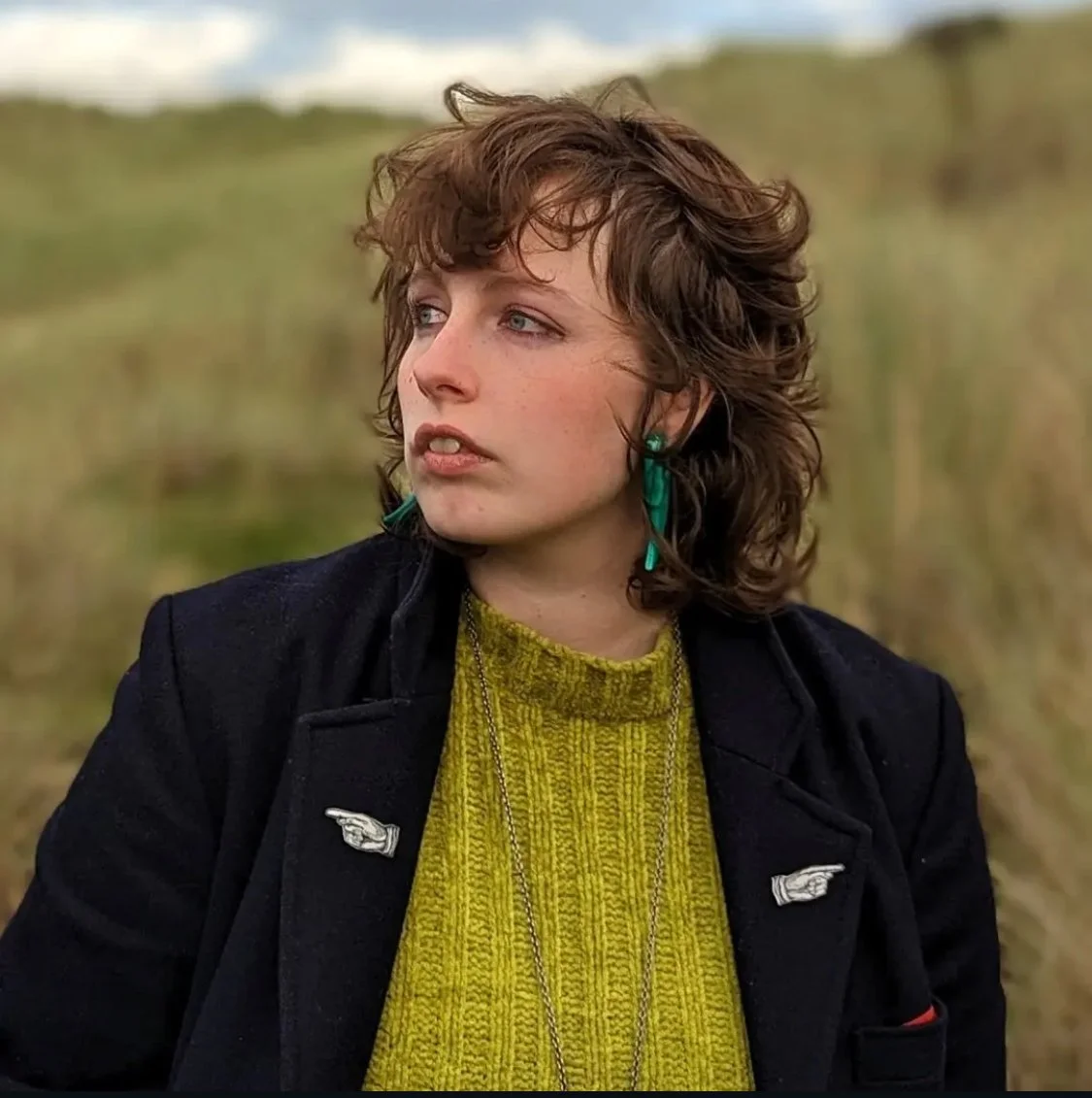
Kym Deyn is a poet and writer focusing on different magics, the gaps in history and myth, time, grief and post-industrial landscapes. They are also the director and editor of The Braag CIC, a poetry and speculative fiction small press that works with writers across the globe as well as supporting emerging authors in the North East of England.
We had the chance to chat to Kym about their influences, how folklore weaves into their poetry, the beauty of collaboration and how they can reconnect with their landscape through their work.
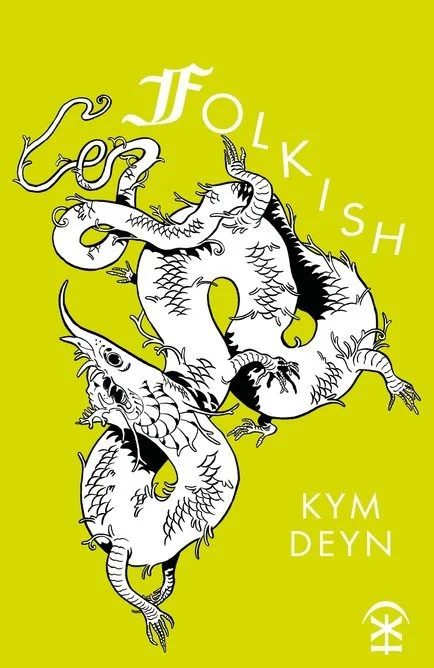
Kym’s latest poetry collection Folkish is available for pre-order and will be released on 23/04/2026, check it out here!
Northern Folklore Archive: Have you always been interested in poetry and folklore, or did something/someone in your life spur this passion on?
I was the kind of child who’d sit in guitar cases with my arms crossed pretending to be a member of the living dead, so anything strange, morbid or usual definitely got my attention.
My interest in folklore was really calcified by gorgeous illustrated books bought for me by parents and relatives like Spiderwick’s Field Guide to the Fantastical World Around You, Dragonology, The Flower Faeries, and Lady Cottington’s Pressed Fairy Book (which, now I think on it—given the subject matter and frequent nudity—may have been a gift for my parents, rather than for me…)
As for poetry, I enjoyed it but only began writing it as a teenager. When I was eighteen I was lucky enough to get into The Writing Squad, a mentoring scheme for young writers (16-22) in the North of England, which gave me the support to really begin pursuing poetry seriously.
Do you find that folklore naturally lends itself to being told through poetry?
Poetry has always been a way to pass on folklore, whether that’s early oral poems or the Ingoldsby Legends. Though, I don’t generally utilise the traditional metre or ballad for my folklore poems, instead using some modern forms and free verse.
For me, poetry is what happens at the edge of language, in its scruffy wild borderlands where there’s fewer rules and higher stakes. It lets me splinter folktales and climb into the gaps, open up new perspectives, personas or ways of reading them. The tale is new in each teller’s mouth, and poetry is the same, remaking itself for each person who writes it.
You're the director and editor of The Braag CIC, a poetry and speculative fiction micro-press. Do you find that working with other writers from the North East helps fuel your own creative projects and inspires your own work?
Let me bang the drum of CREATIVE COLLABORATION AND COMMUNITY.
You’re in discussion with each writer you’ve ever read, standing on the shoulders of a hundred literary traditions. No good writer is an island and I love talking to the dead and distant as much as anyone, but you’ll get more responses from the people around you, doing the same work. It’s essential and one of the best things about being a writer.
As a publisher, it's delightful to be able to support other writers and show off their work to the world. It’s a nourishing practice, and in editing other people’s work you learn so much about your own processes.
What is it about folklore and the 'folk' community that influences your creative projects? Do you find that it helps you to reconnect with your local history and landscape?
I’m animist in belief and outlook, folktales are a look into the spirit of a place, they capture something essential about the landscapes that generated them. I like that folktales can be iterative, that they leave questions open. Sometimes I even prefer them fragmentary, because you can work into the gaps.
I’ve definitely been inspired by things like David Southwell’s Hookland Project and the Esme Boggart protests against evictions. It’s a fundamentally speculative, imaginative community interested in working-class history and collective mythmaking. It’s folklore as something radical and future-making too, not confined to the past. The ‘folk’ in folklore are what makes it something alive.
Lastly (and I'm asking this to everyone) one of the Northern Folklore Duo is a huge film fan, so this question is purely for him... what is your favourite film?!
I think it might be Studio Ghibli’s Pom Poko (1994) which follows a colony of shape-shifting Tanuki (Japanese raccoon dogs) as they try to sabotage the building of a new housing development over their territory, and sits perfectly on that intersection between ecology, landscape, protest and folklore.
It’s a deeply silly film that also captures the anger and grief of losing a home.
It was so lovely to chat to Kym about their inspirations and how folklore has played an integral part in their creative processes. If you’d like to connect with Kym, you can find their website at kymdeyn.com and their Instagram @shortestwitch.
Community Categories
Quick click to another article from the categories below.
- Artist
- Printmaker
- Cornwall
- Folk Music
- Folk Workshops
- Foraging
- Foraging Folklore
- zoe eliza
- Folklore Art
- Emily Wild
- Interview
- Blood Stone Books
- Folklorist
- Pickled Pennies Prints
- Musician
- Craig Hallam
- Wycombe
- Morgana Weeks
- Poet
- Plantlore
- Corn Dollies
- Linocut
- YouTube
- Vic Jay Art
- Ros Lorimer
- Linocut Printer
- Illustrator
- Sasha Spyrou
- Author
- Wyrd Wycombe
- Minifis Oddities
- Stevyn Colgan
- Emma Kathryn
- Filmmaker
- Scared in the Name of Science
- Liza Frank
- Ciara Armstrong
- artist
- elisabeth flett
- Events
- Folklore
- Historian
- North East Folklore Society
- Witch
- Folklore Agony Aunt
- musician
- Will Matthews
- HerOrangeCoat
- Wabi Sabi Creations
- Podcast
- kirsty greenwood
- Publisher
- Nikki Bell
- Another Realm
- folk music
- North East
- Devon
- Kym Deyn
- writer
- Writer
- illustrator