St. Cuthbert’s Cave
Belford, Northumberland
“St Cuthbert’s Cave, nestled away in the remote countryside of Belford, oozes mystery due to its spiritual past.” Visit Northumberland
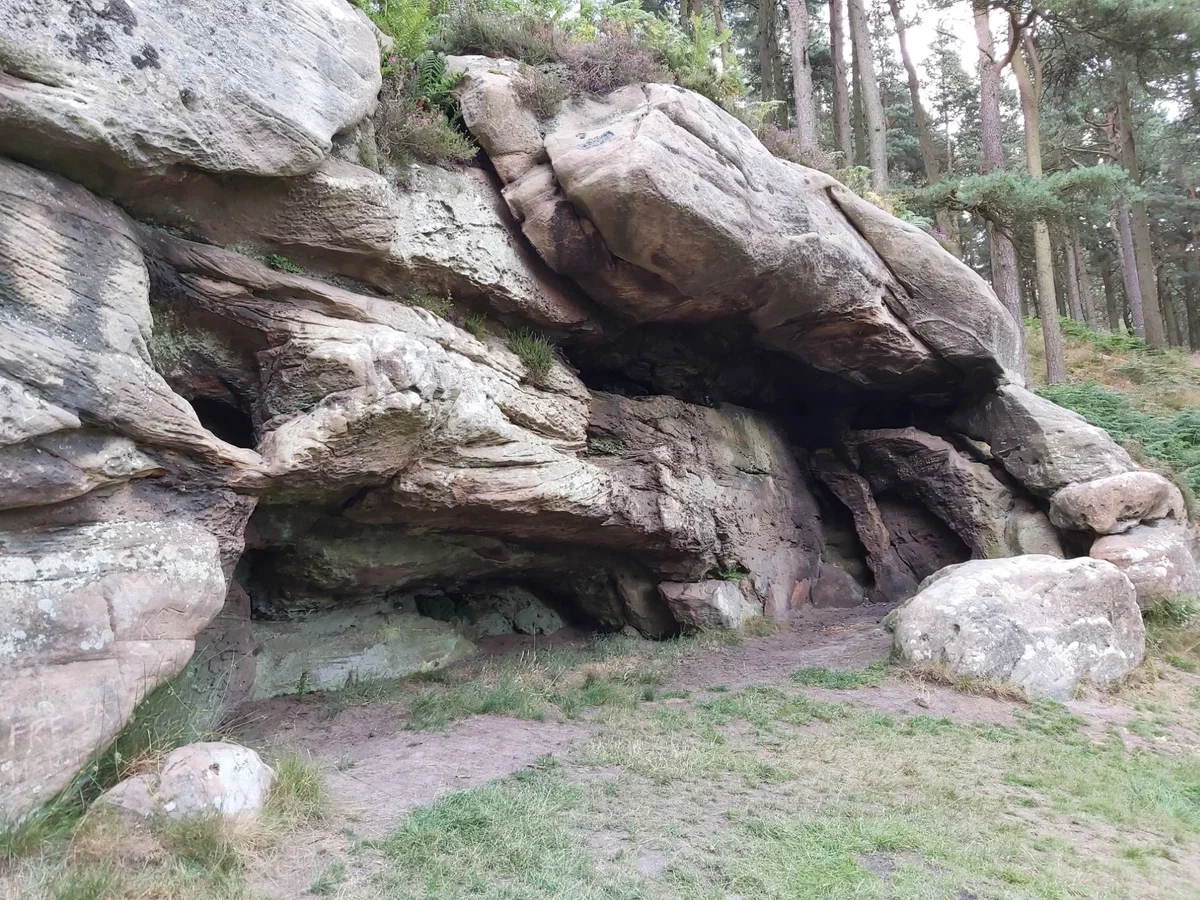
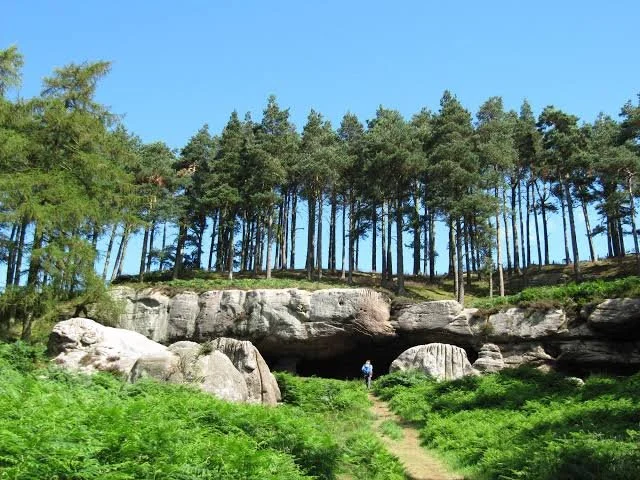
A sandstone cave, formed from a large overhanging rock supported by a single, natural rock pillar in the centre, sits in Northumberland completely shrouded in history. And what history is that?! This shelter has supposed connections to Cuthbert, a saint of the early Northumbrian church in the Celtic tradition.
A monk, bishop and hermit, associated with the monasteries of Melrose and Lindisfarne, St. Cuthbert’s journey began in 651, when he was only sixteen years old, with a vision of angels raising the soul of Aidan, Bishop of Lindisfarne, to heaven. The young shepherd, moved so by the vision, devoted his life to the service of God and joined the monasteries at Melrose, and then Ripon before, at the age of 30, travelling to Lindisfarne Priory.
Known for his values of humility, simplicity and tolerance, he was also famed for his love of wildlife and the natural world. But what is his connection to this marvellous rocky overhang?
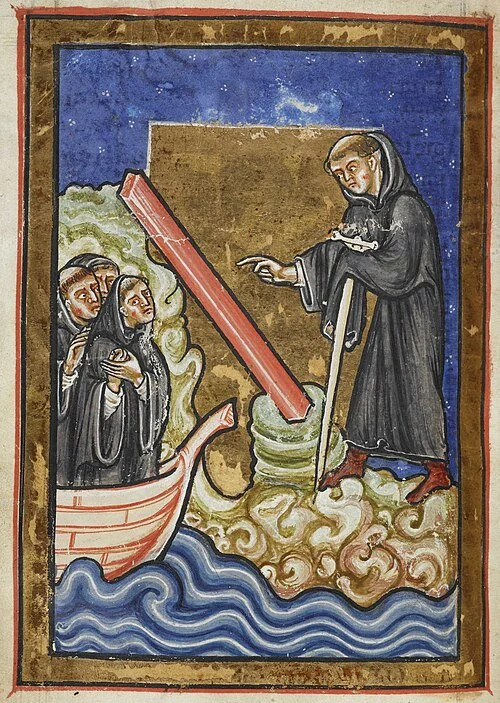
Cuthbert discovers a piece of timber, from a 12th-century manuscript of Bede’s Life of St Cuthbert
Cuthbert was buried, after his death in 687, in the Church of St Peter at Lindisfarne. However, in 793 the Vikings arrived to attack Lindisfarne, and by 875 it was considered too unsafe for the monks to stay. So they fled, taking the relics of their beloved saint with them, including his body.
According to the legend, this sandstone cave might have been one the many places where monks escaping Danish invaders took shelter while transporting St. Cuthbert’s body. It has also been attributed to where Cuthbert himself may have spent time living as an anchorite hermit, whilst he was alive, before moving to the Farne Islands.
Cuthbert’s body was moved from place to place, spending 110 years at Chester-le-Street before being moved once again due to Danish raids in 995. He briefly spent some time in Ripon, before the wagon carrying the saint's coffin got trapped in mud east of where Durham City is now located. It is said that Cuthbert appeared to the monks after they prayed to him for help and he told them that he wished to be laid to rest at ‘Dunholme’, a place where a dun cow lived. The monks found the place in Cuthbert’s request above the River Wear and this is where they built what would go on to become Durham Cathedral.
Since then, the cave has been used as a lambing shed, was also once owned by the Leather family and became the family burial place, and was designated consecrated ground in 1936. A very glorious piece of rock with fascinating legends tied to it!