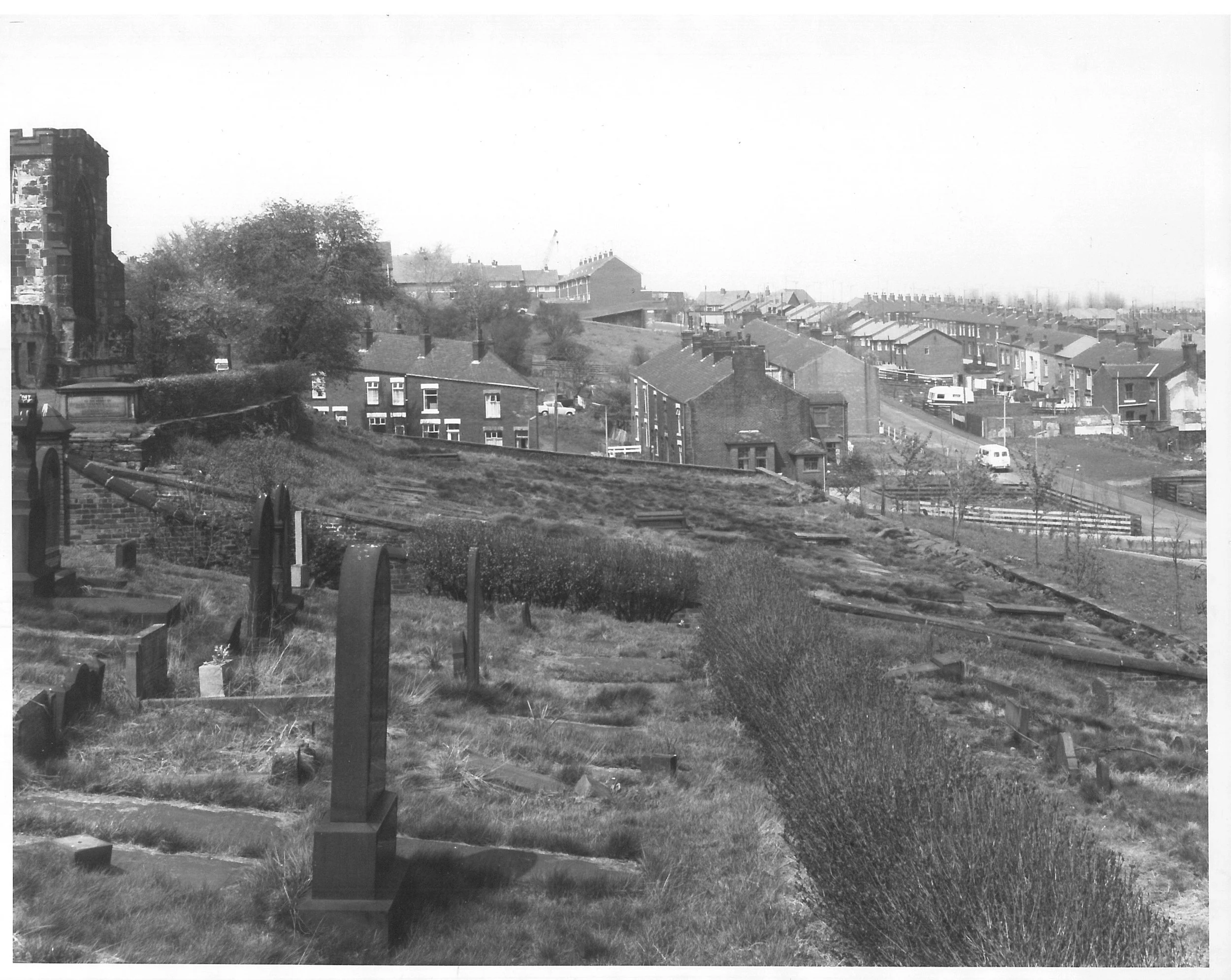
Middleton, Greater Manchester
“That man was known at the time, and forever since, as “Owd Kankey”, and there’s not much written about him, but his tale is known by most in Middleton – a story told to kids probably to stop them messing about in the cemetery or to make them think twice about going down the ginnel at night.” Ben Brown
I heard about the tale of Owd Kankey through a comment from one of our lovely Instagram followers. After posting a ghost story from Middleton, anthonyxgreen alerted me to the legend of Owd Kankey… Thank you Anthony!
Kankey Ginnel, or Kanky, or Canky (many different spellings) relates to a passageway that served to link the 900 year old Parish Church with the River Irk. And it is from this ginnel that our main character gained his nickname ‘Owd Kankey’.
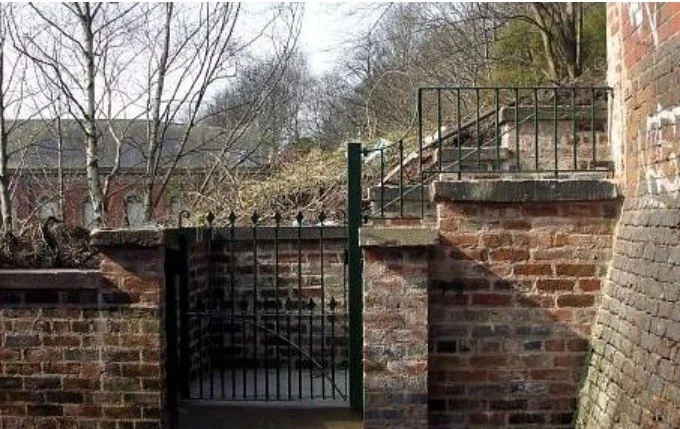
Kankey Ginnel, Middleton
There isn’t a lot written about him, in fact, the only official documentation of a man going by that nickname is in an obituary in the Middleton Guardian, dated 4th November 1882.
About a quarter past eight on Friday night, William Lancashire, better known as “Owd Kankey”, was discovered dead in his house, near the cemetery wall behind Lodge-street.
William had supposedly died of severe bronchitis with the newspaper surmising that he must’ve ‘evidently gone into the kitchen for the purpose of replenishing his fire, when he was overcome with an attack of illness, in which he died.’ William was described ‘in stature a diminutive man, scarcely four feet high, his back bent by the three score years and ten which he carried. He seemed to have an aversion for soap and water, and to have extended this feeling to his household, indeed on several occasions the sanitary authority have received complaints in this respect.’
So how did Mr. Lancashire become such a terrifying legend, used to warn children away from both Middleton ginnels and graveyards after dark?
Upon investigation after being discovered dead, authorities found large sums of money stashed away in different hiding places within his home. His home, on Back Lodge Street, sat directly opposite Kankey Ginnel… the very one that lead from the cemetery at the Church to the River Irk.
Legend has it that William would spend his days sat at his window, smoking his pipe, and observing burials from his vantage point in his house. Then, in the secrecy of the dark, would sneak out at night to dig up the freshly buried. He’d transport these cadavers on his back (rumours which derived from his hunchback appearance) down Kankey Ginnel to a boat waiting for him on the River Irk.
He’d then sail over to Manchester and sell his grave-robbed goods to medical students and anatomists, both willing to pay good cash for corpses. Locals claimed to never see William leave his house during the day to work like the rest of them, naturally drawing the conclusion that Mr. Lancashire could only possibly make such a fortune from grave-robbing.
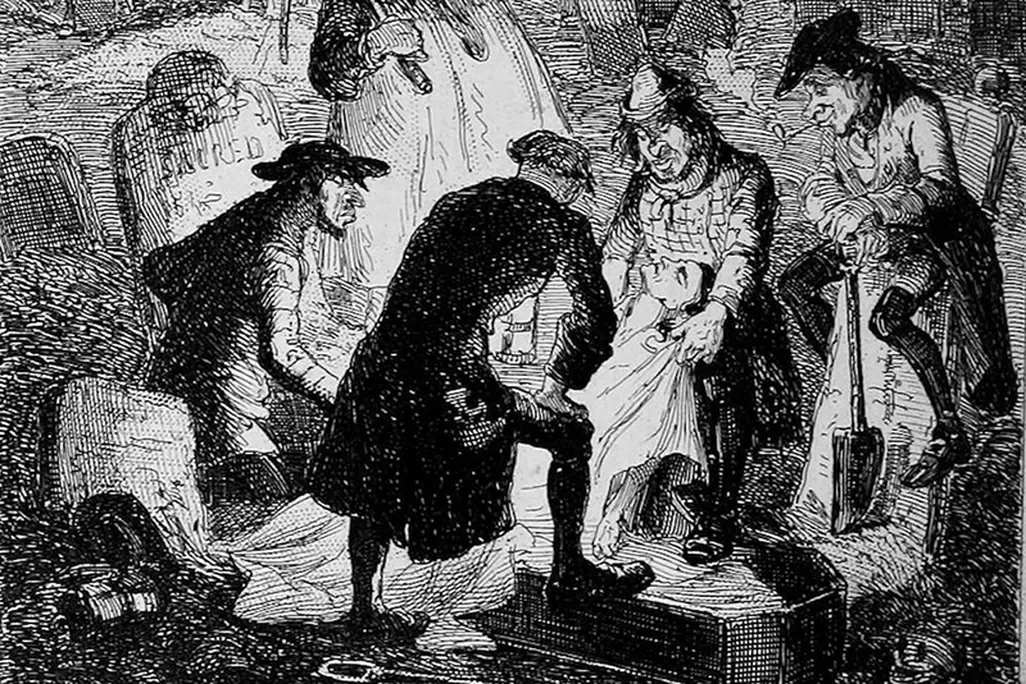
An 1887 illustration by British artist Hablot Knight Browne of “resurrectionists” stealing dead bodies from a graveyard.
Middleton, from old records, was indeed going through an era of grave-robbing crimes. One of the town’s most famous men, Samuel Bamford, (a 19th century radical poet and reformer) reputedly retained the body of his deceased wife for a month in his home to prevent grave robbers and body snatchers from stealing her.
So, could there be truth in the wild accusations formed against Owd Kankey? Perhaps, given the era… but the same could be said that this urban legend derived from the fears of the locals of the time and poor William Lancashire had simply been savvy with his money and accumulated savings in a law-abiding manner.
Sources
Old Kankey | Middleton Heritage
Owd Kanky: The Mysterious Body-Snatcher of Middleton - Manchester’s Finest
Middleton Guardian, 4 Nov 1882