York, Yorkshire 1825
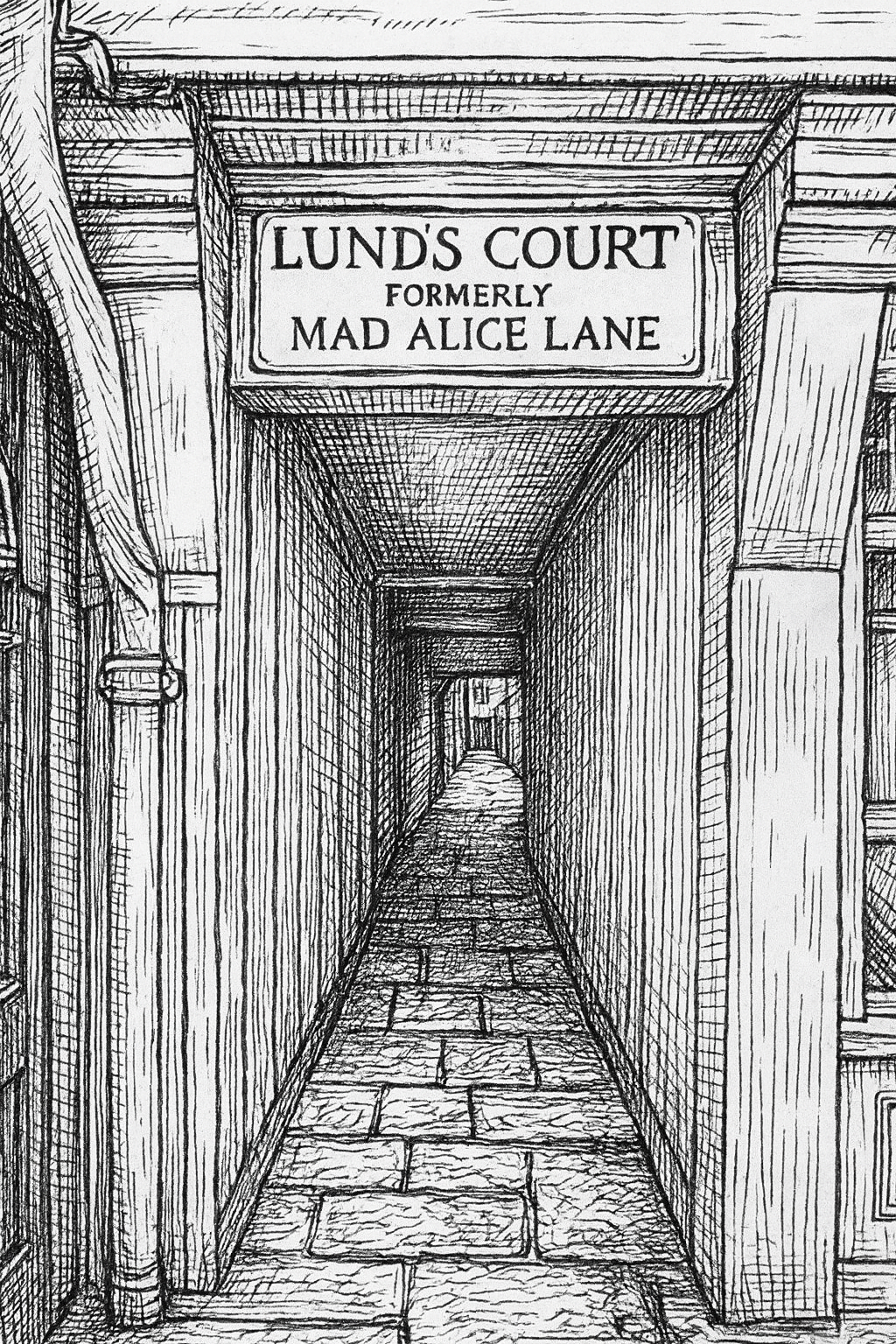
“poor mad Alice Smith! The lane was her home until 1825 when she was taken to the castle and hanged for the ‘crime’ of insanity”
Have I researched another story from York so I have an excuse to say the word ‘Snickelway’ again? Highly likely. There’s actually not an awful lot written about this tale, which makes sense when you consider the nature of folklore as a whole - stories shared over flickering campfires, during Christmas time, at family gatherings or to children. It makes sense that a tale passed between lips would eventually lose credibility in terms of fact-checking, and would certainly have little written about it.
I will continue to document these tales, no matter how little material I have to work with! We’re transporting to York in the 17th Century for this folklore story - a city filled with snickelway after snickelway, crammed tightly with rich history and overflowing with the folklore equivalent of Chinese Whispers. A ‘snickelway’, for those who aren’t as obsessed as I am, is a combination of the Yorkshire terms ‘ginnel’, ‘alleyway’ and snicket’. So very charming. One of these snickelways is home to a rather tragic tale of what some may consider injustice and is most certainly about a woman scorned. Lund’s Court, which links Swinegate and Low Petergate, was formerly named Mad Alice Lane (unfairly so, in my opinion).
It is said that the name of this snickelway relates to an Alice Smith who supposedly lived here until 1825. The reason for her departure is not because she fancied relocating, or she found a nicer property... no. Alice supposedly was experiencing a rather bad time at the hands of her husband, who’d beat her (not unknown of for this time period, so could hold truth). Alice, having had enough of the abuse, took matters into her own hands and plucked up the courage to poison her vile husband and be rid of him for good... allegedly.
Alice, so very obviously insane for doing this (sigh), was taken to York Castle and determined ‘mad’ which, apparently, meant she had to be hanged. It has been reported that passer-bys to Mad Alice Lane can sometimes see a ghostly woman hanging (sorry) around and has been seen looking down at the lane from windows above... Could this tale be true? It’s possible that there may have been a lady called Alice (although I will admit ‘Smith’ is a very generic surname!) who lived in York in the 1800s, and chances are she may have been abused by her husband as many women were (and let’s face it, still are).
However, Capital Punishment UK records state there was no Alice Smith executed in York during this time period. In the list of women executed between 1800 and 1868, an interesting but rather morbid list might I add, there are only two mentions of an ‘Alice’, neither being in York. I’m not sure that this rules out the idea that an Alice was ever executed in York, maybe she was and it was kept under the radar? It was not the rule at the time that those labelled ‘insane’ were publicly executed, it’s more likely that Alice was carted off to York Lunatic Asylum (now Bootham Park Hospital). It may be that someone wanted Alice executed, and did it off the record?
No matter how you feel about the case of Mad Alice, these stories all originate from somewhere. Even if this was a work of fiction to scare eager listeners one evening in an 1800s York tavern, it is still a tale worth re-telling.
Sources
https://www.thebloodytourofyork.co.uk/mad-alice/
https://madliam.blogspot.com/2012/11/the-york-insider-who-fawkes-was-alice.html
https://en.wikipedia.org/wiki/Snickelways_of_York
https://murderandcrime.co.uk/more-crime.php?mh=1
https://alumnivoices.co.uk/2023/10/31/city-of-spirits-ghost-stories-of-york/