Is the Holy Grail in Yorkshire?
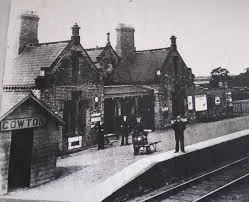
East Cowton, Northallerton 1142
“…what about the possibility that [the Holy Grail] could be hidden in Yorkshire, buried in a field for centuries at the spot where the secretive order, the Knights Templar, is said to have built a stone church?” The Northern Echo, 2006.
Now then. I am from Yorkshire, so I am biased, but if there ever was a suitable stronghold for a precious item, I’d choose Yorkshire. I’d choose Yorkshire every time. We’ve all heard about The Holy Grail, but what exactly is it?
Tales about the Holy Grail differ depending on who you ask. Some will say it’s a sacred vessel Jesus once filled with wine at the Last Supper to pass between his disciples. Others claim The Holy Grail is the cup Joseph of Arimathea used to collect the blood of Christ before fleeing to Glastonbury to be protected by his descendants over centuries and centuries. If you ask author of The DaVinci Code, Dan Brown, (or any of his readers) he’ll tell you it is evidence that Jesus Christ had a child. If you ask me, The Holy Grail is shredded cheese from the fridge at 3am.
The Grail first appeared in an unfinished poem written by Chretien de Troyes in 1180, and since has been a point of discussion as to what it means and who it ‘belongs’ to within religious circles and in more mystical Welsh, Celtic and Irish folklore. But Yorkshire, from what I remember anyway, has never had a mention in terms of the Holy Grail. Could the Holy Grail, whatever it is, have been buried deep beneath Yorkshire earth this whole time?!
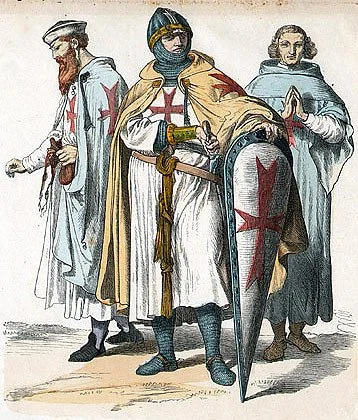
The Knights Templar, formed in 1120 after the first crusade, was created to capture the Holy Land and protect all Christian pilgrims travelling towards it. Whilst this era of history was occurring, it is said that the knights dug beneath their headquarters, the Temple of Solomon in Jerusalem and found several artifacts including said Holy Grail.
The knights and ‘soldier monks’ involved in the crusade suddenly happened upon a large amount of wealth and power (unrelated to the discovery of ancient artefacts, I’m sure). And so they continued to spread across Europe and accrued a large amount of land, some of it in the U.K, turning it into a sweet combination of farmsteads and monasteries. It is believed that they formed ten preceptories in Yorkshire: Copmanthorpe (Castle Mills of York), Faxfleet, Foulbridge, Penhill, Ribston, Temple Cowton, Temple Hirst, Temple Newsam, Westerdale, and Whitley.
The Knights Templar did not last as long as they probably would have liked, as in the early 14th century King Philip IV (envious of their newfound power and wealth) charged the order with heresy and immorality. A lot of these temples populated by knights and soldier monks were burned to the ground, and those involved arrested and taken to abbeys for penance, or simply burned at the stake.
One of the ten preceptories built in Yorkshire was the Temple Cowton Preceptory, located in East Cowton, a small village in Northallerton. This temple was founded in 1142 and considered one of the more notable temples due to Edward I visiting in 1300. There is supposedly, due to the importance of this particular templar, legend around the area that it cannot be discounted as the hiding place of the sacred Holy Grail - in the fields around the site of the old Temple Cowton Preceptory.
Former vicar and best-selling children's author Graham Taylor claims: "This area was the M1 of the religious superhighway of the Dark Ages and we don't appreciate in the North how much was going on spiritually in this area”, he goes on to say that fifteen landowners in the area of the Temple Cowton were exempt from paying tax… He surmises that these landowners could have been given tax exemption because they knew something incredibly ‘special’ was buried there.
His historical detective work aside, Graham mostly heard of this legend through local people from East Cowton claiming that they also believe the Holy Grail could be buried somewhere in their village. No excavations on this land have taken place… so it does beg the question, what is buried there?! Could this legend be true?!