Wallsend, Tyne & Wear 1700s
“The adventurer… is said to have been returning home from Newcastle after nightfall. When turning, up the road past Wallsend, at the foot of the eminence on which the old church stands, he was surprised to observe the interior of the edifice brilliantly lighted up.” - Monthly Chronicle of North Country Lore and Legend, 1888
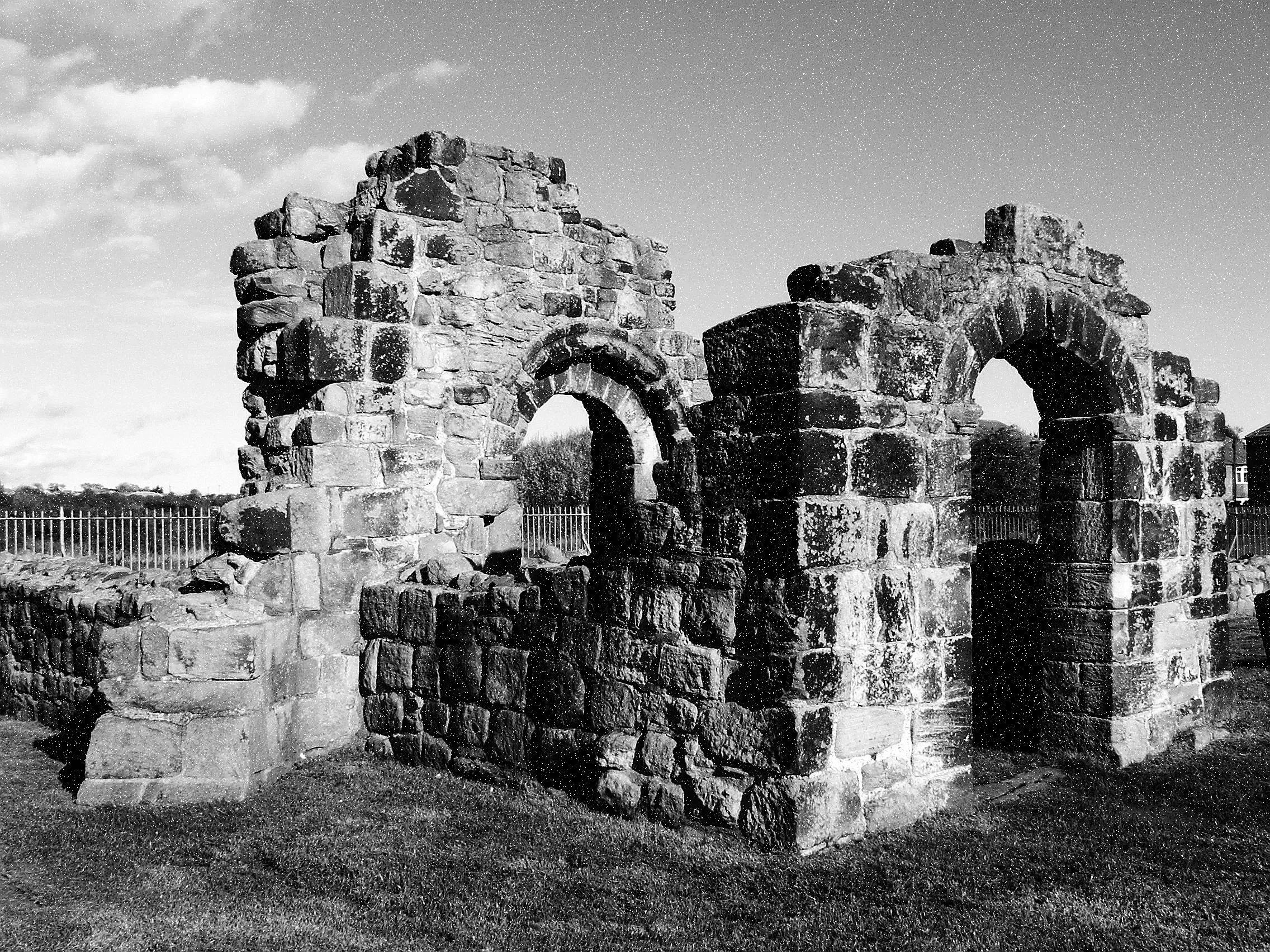
We’re looking at some more witch tales from the North, for we do have many! Called Segedunum by the Romans after building fortifications at the end of Hadrian’s Wall (Wallsend! Walls End! Wow!), Wallsend is a little industrial town in the North East.
Our protagonist is supposedly one of the Lords of Seaton Delaval. Whilst on his journey home from a trip to Newcastle, after night had fallen, he stumbled upon an old church in Wallsend. As he passed, his curiosity was peaked by the brightly lit interior, it was very late… who could possibly be preaching at that hour? Nobody must’ve told him that curiosity is what allegedly killed the cat…
He rode up to the gate, dismounted his horse, and gingerly treaded through the graveyard and up to the church windows. As he peered through the window he saw a Communion table. Human skulls, containing some kind of flammable substance, were burning brightly at each corner of the table. A cauldron was hanging, swinging slightly, from the bell rope at the back of the church. As his eyes wandered around the scene, he spotted the corpse of a woman partly wrapped in a sheet… All very strange things to be in a church.
But it got weirder for our traveller. A number of old women sat around the table making charms and chanting spells, whilst another, described as ‘ugly with bucked teeth, a stubbly beard, red fiery eyes and withered wrinkled skin’, was cutting the left breast off the female corpse. The now dismembered breast was placed in the hanging cauldron. These ‘detestably wicked old women’, as described by the Lord, must be stopped! He charged with all his might into the doors, startling the women and causing them to scarper. Some fled through the door, some through a window and some allegedly climbed to the roof and launched off into the sky through openings in the Belfry.
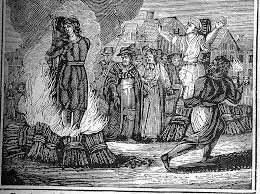
The woman responsible for the slicing of the breast was left in the church, caught by the Lord. Despite her struggle, the Lord managed to subdue her, tie her up, mount her on his horse and took off with his prisoner. It is unsure where the Lord actually took the woman, either to the assizes, the sessions, or the baron’s own court, but rest assured (phew!) that this scandalous woman was sentenced to be burnt on the beach in the vicinity of Seaton Delaval.
The woman asked one final request before her inevitable burning: two new wooden dishes. As she was tied to the stake, her two dishes were handed to her just as they lit up the combustibles beneath her. Time running out, the woman placed the two wooden dishes on her feet, muttered a spell under her breath, managed to shake her fastenings and ‘soared away on the sea-breeze’. Unfortunately, one of the dishes was a bit of a dud and fell off her foot, causing her to plummet back to the ground with a thud. She was then, obviously, thrown back onto the flames and perished on the beach.
There’s been many debate as to who the weary travelling Lord actually was, and when this took place. According to the Monthly Chronicle of North Country Lore and Legend back in 1888, our protagonist was Sir Francis Blake Delaval. He died in 1771, so we’d presume this happened during his life in the 1700s… However, no official record of these crimes were written down (by the sounds of the story, it doesn’t seem this Lord took much of an ‘official’ route to sentencing her…).
As with most witch tales, I think we can take this legend with a pinch of salt. Probably rooted in some truth, the truth being people sentencing women for just about anything and probably totally and completely embellishing the truth, this legend will live on as a great folklore story.