Newcastle, Tyne & Wear 1901
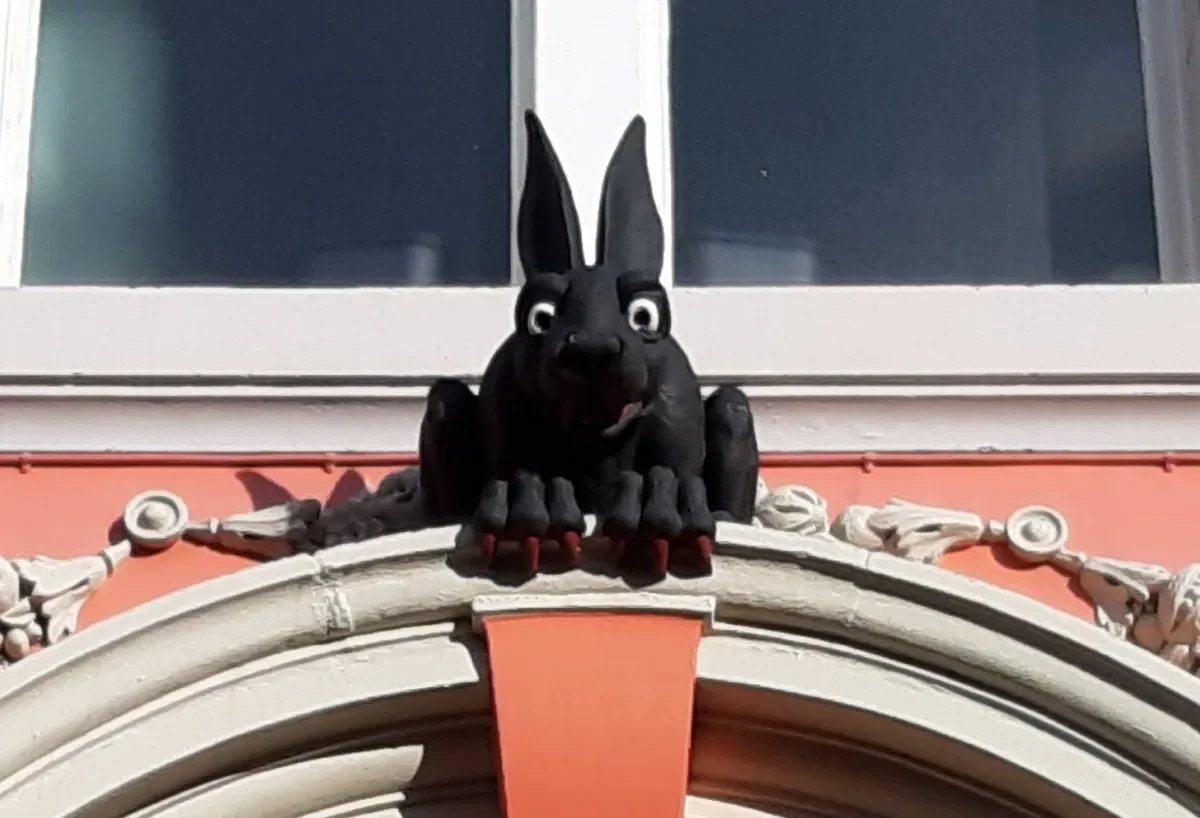
“A jet black creature squats above a door, staring down at you. But it’s not the demon red eyes you focus on – it’s the fangs. The terrible long fangs! And nails, stained with blood!”
Yes, I too had Monty Python come immediately to mind when I happened upon the Vampire Rabbit of Newcastle. But no, it is not a comedy sketch, the Vampire Rabbit of Newcastle is actually a Grotesque sat on top of the ornate rear entrance to Cathedral Buildings which faces the eastern end of St Nicholas’ Cathedral. No one can confidently say why this rabbit decoration sits there, staring down at passer-by’s, but many local tales and myths have arisen from his presence.
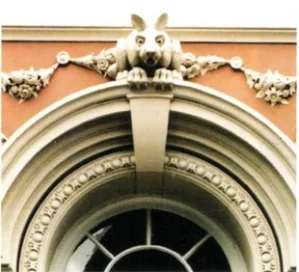
Collingwood House, part of the Cathedral Buildings where you will find the blood-sucking bunny, was built back in 1901 by architects Oliver, Leeson and Wood. The original design of the rabbit was white, or a plain sandstone, in keeping with the decorative scheme of the building. The black appearance we see today (with the addition of the red, bloody fangs and claws) was a modern alteration… unsure why other than to provide a bit more of a gothic touch to the building (I approve).
Nowadays, the buildings are used as a complex of housing offices, shops and restaurants with the land directly beneath the bunny serving as a car park… but once of a day that land was part of the cathedral’s graveyard and you can even see the original grave slabs littering the floor. No good comes from building over graveyards…
One legend of the rabbit’s presence, due to the historical graveyard that once sat underneath, tells of the grotesque being used as a deterrent for graverobbers in 1901. Graverobbing, as a hobby or career, had fizzled out by 1901 so this tale is up for debate.
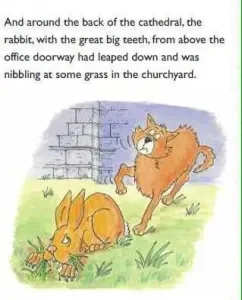
The rabbit did find local fame, deservingly so, in a children’s book called Tinseltoon by Christopher Goulding in 1998. The narrative included the town’s statues all coming to life to cause chaos in the town, including our grotesque rabbit who begins eating the churchyard lawn.
Another myth emerged when folk realised that the ears on the rabbit weren’t quite right… Looking back at the original sandstone design of the grotesque, the ears look different to the black design today. Some say that the ears were accidentally knocked off, and some half-wit returned them but mistakenly backwards, meaning that the rabbit is not a rabbit at all and is, in fact, a hare. If this is true, some say the grotesque could be a reference to a friend of Wood (one of the architects) Sir George Hare Phipson - one of the founders of Durham Masonic Hall. Is that a stretch?!
It has also been said that the grotesque could be a reference to local artist Thomas Bewick, who often featured hares in his art, with his workshop being pretty much right next door in Cathedral Close. Did the architects have a love for Bewick’s work, and wished to honour him?
Rabbits do have a long history in Christian iconography as a symbol of Easter and can sometimes be seen in some folklore as a symbol of fertility, but I haven’t heard of many other tales of blood-sucking rabbits in other folklore stories from the North of the U.K. Please do let me know in the comments if you’ve heard of any local or niche stories of such a thing!