Stevyn Colgan: Artist, Author and Folklorist
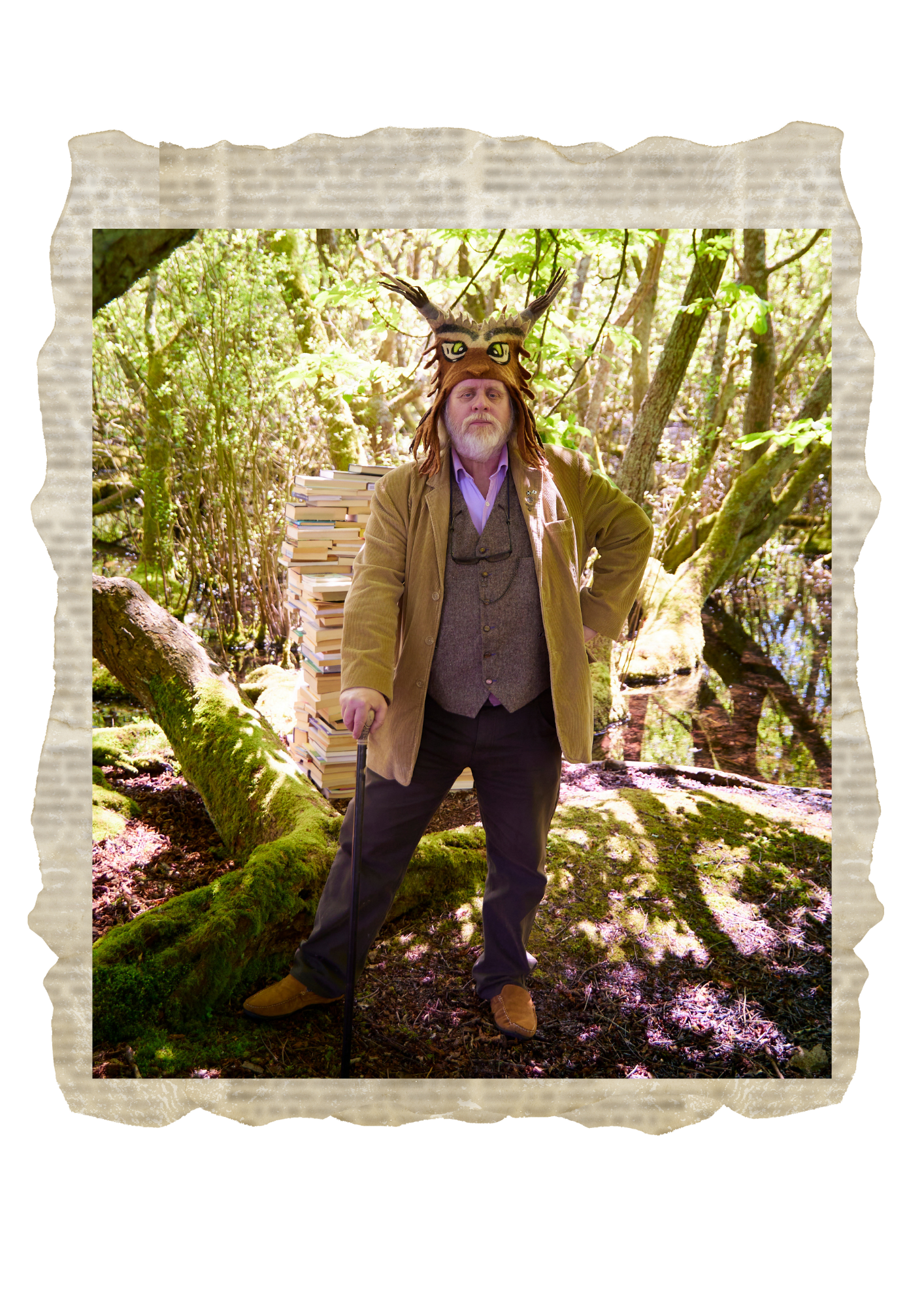
Northern Folklore Archive had the absolute pleasure of chatting to author, artist and folklorist Stevyn Colgan. Kicking off his career as a writer and researcher for BBC TV show QI and sister shows on radio and podcast, The Museum of Curiosity and No Such Thing as a Fish, Stevyn originated from south-west Cornwall but currently lives in Hazlemere, a village between Amersham and High Wycombe in Buckinghamshire.
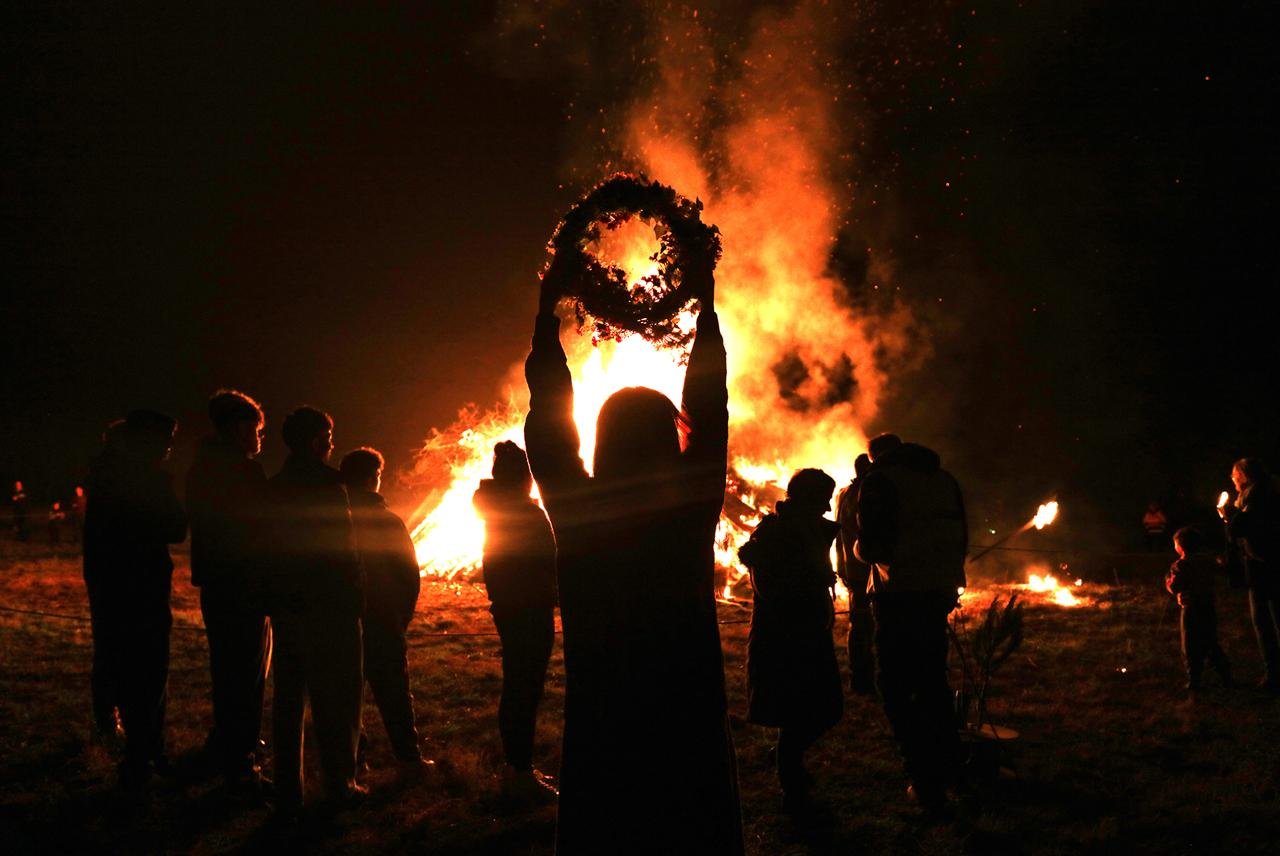
Last year, Stevyn co-organised a midsummer festival in West Wycombe, on behalf of the Dashwood family, which included music, Morris, a huge bonfire and tours of the nearby caves where Sir Francis Dashwood's 'Hellfire Club' held their meetings in the 1700s. The festival is returning in full force on Sunday 21st June 2026 (the solstice!). It promises to be even bigger and better than the last.
Stevyn has also co-created the new Imbolc/St Brigid's Day festival taking place on the 1st of February 2026 that will involve similar elements as the midsummer festival but rather than a bonfire, they are planning a re-enactment of the ancient local legend of the slaying of the Wycombe Wyrm (aka the Hughenden Dragon) that supposedly took place in the 1500s! We chatted with Stevyn to find out more about his events and how his love for folklore begun.
Northern Folklore Archive: Did you have an interest in folklore before becoming a writer/researcher for QI, The Museum of Curiosity and No Such Thing as a Fish? Or did you find that your research for these shows was formative for your folklore-filled career?
Stevyn: I grew up in Penzance and Helston in Cornwall. I was surrounded by folk tradition, Cornish culture and the arts. Sunday afternoon family walks took us out to so many ancient sites - dolmens, stone circles, hill forts, fogous, menhirs - and my dad, who was a writer and artist, would tell us the stories that accompanied these places. My mum's side of the family were all farmers going right back as far as records could take us and they had a lot of country lore to share. If you combine all of that with the stories in folk songs (in the 60s and 70s, that was pretty much the only live music we saw in southwest Cornwall, apart from male voice choirs) and attending events like Helston Flora Day, Padstow Obby Oss, Tom Bawcock's Eve, Tansys Golowan, Crying the Neck etc. it's no wonder I developed a fascination for folklore.
And when, like so many young Cornish people, I left the duchy to find work (Cornwall is one of the poorest regions in Europe and work is poorly paid and seasonal) my interest extended to the rest of the U.K. So I've stood with druids at Stonehenge on the summer solstice, watched the Whittlesea Straw Bear lumber through the Fenland streets, Wassailed Shakespeare's Globe on Bankside, followed the Hastings Jack in the Green and attended so many other events over the past four decades.
Naturally, when I landed the job writing for QI, I tried to sneak in as much esoterica as I could. It was easier with Radio 4's The Museum of Curiosity as the panellists weren't just comedians so we managed to get people on the show like Professor Ronald Hutton. Then, when I left QI I started lecturing at Buckinghamshire University and one of my bosses was Dr Ciaran O'Keeffe - the psychologist you see on shows like Uncanny and Most Haunted. We're great friends and we have some great conversations. But now I'm retired I'm spending my time trying to create new folk culture events and resurrecting old customs and stories. It's been a lifelong passion.
Do you find that living in an area that doesn't celebrate its history/folklore as prevalently as other areas spurs you to continue exploring folklore? Are you hoping that your upcoming projects/events will help to get people more interested in your local area's stories and customs? Are you maybe hoping to start some new traditions in these areas?
I currently live in South Bucks and it's a curious sort of place as there are very few folk culture events. I think part of the reason is that folk culture is usually created by the common folk - the working classes - and this was always a rich area. There are more National Trust properties in Buckinghamshire than any other county so a lot of working people were employed to work at all these grand houses. That said, there is a great tradition of furniture building.
It was really noticeable to me that places like High Wycombe, for example, had very little in terms of public festivals. The town is unique in that it weighs its mayor once a year on a giant set of golden scales to make sure they haven't got fat on the public purse! And just outside Wycombe there is an area that has a huge bonfire celebration and torchlit parade that has been going on since VE Day. But apart from that, there's not a lot. So I wondered if I could create a day to bring people together. Everything at the moment - from politics to social media - seems to be driving us all apart and pitting us against each other. Folk culture does the opposite.
I visit events all around the U.K. and its noticeable that the participants and the audience are old and young, black and white and brown, male, female, trans, able-bodied, disabled, gay, straight, bi, Christian, Pagan, Muslim... and no one cares. It's about celebrating the time of year, the place and the community. I wanted to create something like that for Wycombe. So I did - with some help from the locals. People want events like this but it often needs someone to get the ball rolling.
You've mentioned that you've co-created and are coordinating a new Imbolc/St Brigid's Day festival which will involve a re-enactment of the slaying of the Wycombe Wyrm... Being a folklore nut myself, and an obsessive lover of stories, you have to tell me more about this Wyrm!
Yes! January is always a bit grey and gloomy - especially after the excesses of Christmas and New Year - so February seemed ideal for an event and coincides with that particular stop on the Wheel of the Year. I have a great friend called Mark Page. He's an award-winning photographer and he's a local chap who is passionate about preserving and promoting Wycombe heritage. And one evening over a beer or two we decided to create a calendar based on the Wheel of the Year with eight sections rather than the usual 12 and by using models drawn from the neopagan community. The calendar sold out and we were very pleased with it.
We shot our Samhain photo in the famous Hellfire Caves in West Wycombe - where Sir Francis Dashwood and his friends held their wild parties and mock religious ceremonies - and the calendar sold in their shop. That led to the current crop of Dashwoods, who still live on the West Wycombe estate, asking if perhaps we could help them to create a new seasonal event. This led to Mark and I organising a Summer Solstice festival for June 2025 with a big bonfire, morris dancing, communal eating, live music and tours of the infamous caves. It was hugely successful and so over-subscribed that for 2026 we're trebling the size of the event. All of which leads me back to gloomy February and organising something to cheer people up and to celebrate local folklore.
Having trawled through what few books there were on Buckinghamshire ghosts, monsters and traditions we came across a gentleman called Clive Harper who, in 1985, discovered a lost story from the 1500s involving the slaying of a dragon just outside the town. We then put our research hats on and found everything we could on this story and decided to create a festival based around this 'Wycombe Wyrm'.
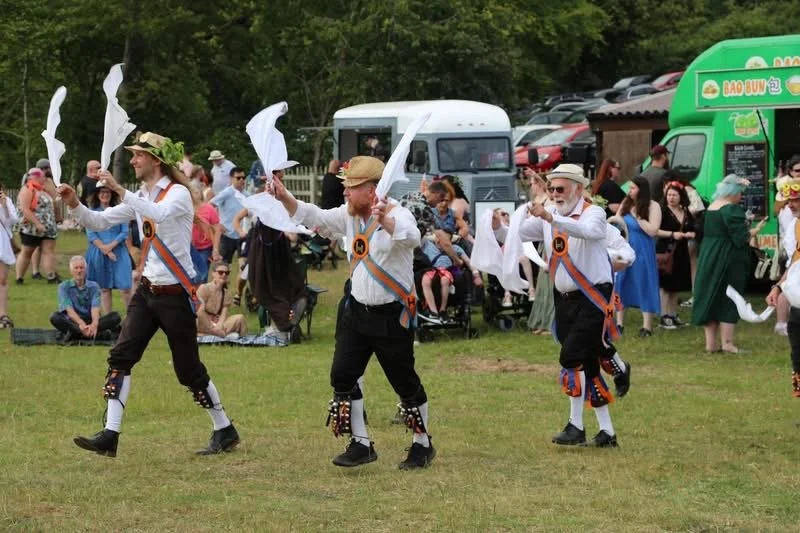
The first ever event takes place on February 1st and we have a folk horror art exhibition, live music with specially composed new folk songs, dancing and entertainment from New Moon Morris and the pageant itself which features a knight in full metal armour fighting with a 15 ft long dragon made entirely from recycled materials. We're also having a commemorative 2026 coin minted for the day and if all goes well, we hope that this day that we've dubbed 'Wyrd Wycombe' will become a new annual event. From little acorns ...
You can find out more details on this event here!
Your recent partnership with social historian Mark Page is so exciting, congratulations! Where do you hope this partnership and Wyrd Wycombe will take you?
We hope that other towns nearby will see the value in promoting folk culture events like these and will consider creating their own. Mark and I may even form a small business to help people do so. I've had quite a lot of experience in organising events and I have a pretty deep knowledge of British folklore.
During the Covid pandemic I created a 'Monster Zoo' featuring monsters made from junk and placed in open spaces kindly provided by nearby farms. I then used social media to encourage local kids to do the same. We got hundreds of monsters! It was safe, socially-distanced and helped families get through the lockdowns. It even got featured on Channel 4's 'Grayson's Art Club' and I then had requests from all over the UK to help people do something similar.
Meanwhile, Mark is also great at organising things and is a retired project manager as well as a successful photographer. We make a pretty good team. So who knows? We may both be busier in retirement than we were in full time jobs!
Lastly (and I'm asking this to everyone) one of the Northern Folklore Duo is a huge film fan, so this question is purely for him... what is your favourite film?!
Oh, that's a tricky one. In terms of story, style and overall brilliance I'd have to say Terry Gilliam's Brazil. It's a slice of genius from start to finish. But there are films I can watch over and over again and never tire of and they range from The Wicker Man to Withnail and I to Wallace and Gromit in Curse of the Were Rabbit!
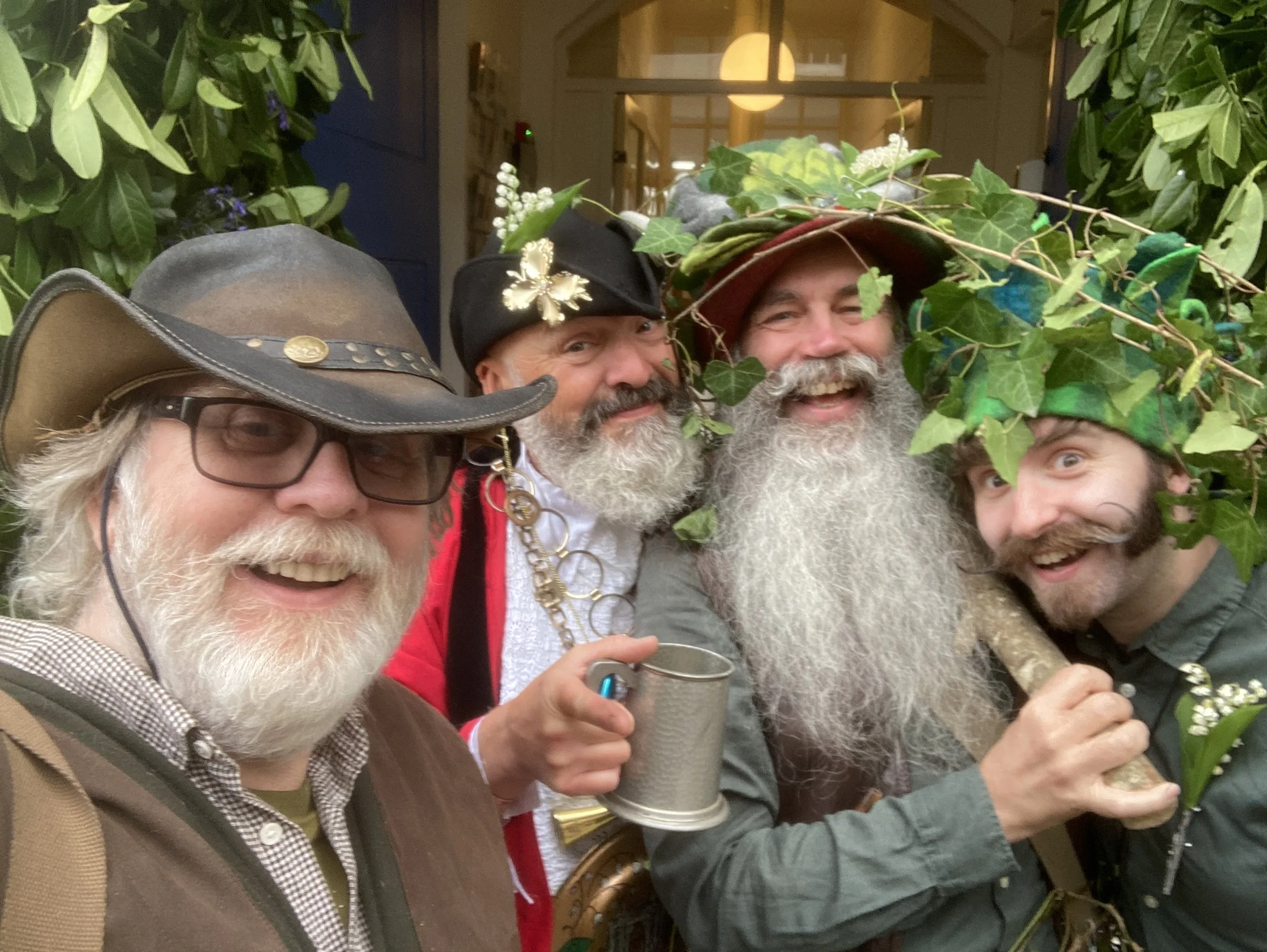
Stevyn is such an interesting icon of the folk community, it was such an honour to be able to chat to him and find out more about the amazing contributions he’s made to folklore. If you’d like to keep up to date with Stevyn’s various doings, be sure to follow him over on Instagram @stevyncolgan and @wyrd_wycombe.
Community Categories
Quick click to another article from the categories below.
- Another Realm
- Artist
- artist
- Author
- Blood Stone Books
- Ciara Armstrong
- Corn Dollies
- Cornwall
- Craig Hallam
- Devon
- elisabeth flett
- Emily Wild
- Emma Kathryn
- Events
- Filmmaker
- Folk Music
- folk music
- Folk Workshops
- Folklore
- Folklore Agony Aunt
- Folklore Art
- Folklorist
- Foraging
- Foraging Folklore
- HerOrangeCoat
- Historian
- Illustrator
- illustrator
- Interview
- kirsty greenwood
- Kym Deyn
- Linocut
- Linocut Printer
- Liza Frank
- Minifis Oddities
- Morgana Weeks
- Musician
- musician
- Nikki Bell
- North East
- North East Folklore Society
- Pickled Pennies Prints
- Plantlore
- Podcast
- Poet
- Printmaker
- Publisher
- Ros Lorimer
- Sasha Spyrou
- Scared in the Name of Science
- Stevyn Colgan
- Vic Jay Art
- Wabi Sabi Creations
- Will Matthews
- Witch
- writer
- Writer
- Wycombe
- Wyrd Wycombe
- YouTube
- zoe eliza