Liza Frank: Folklorist, Agony Aunt & Author
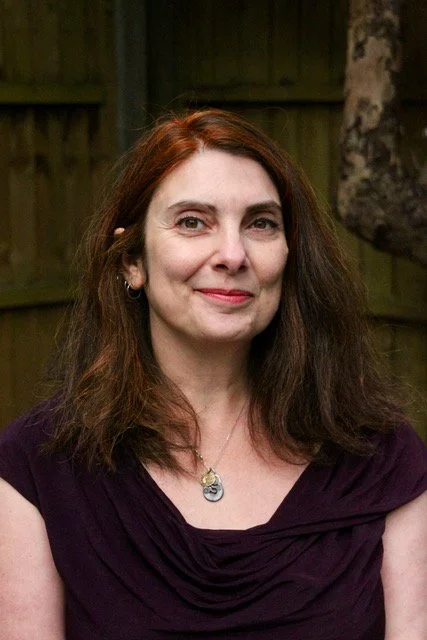
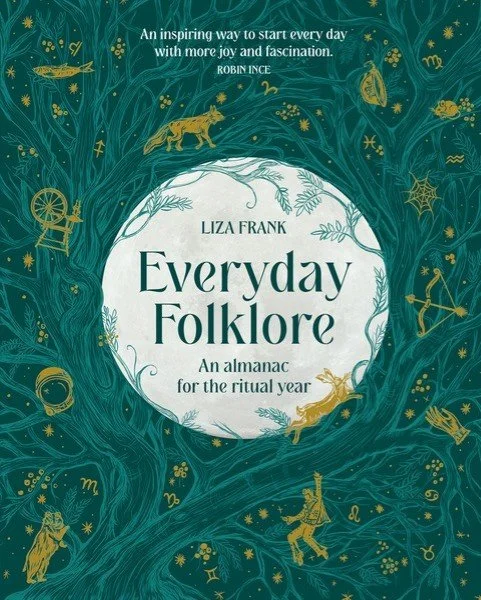
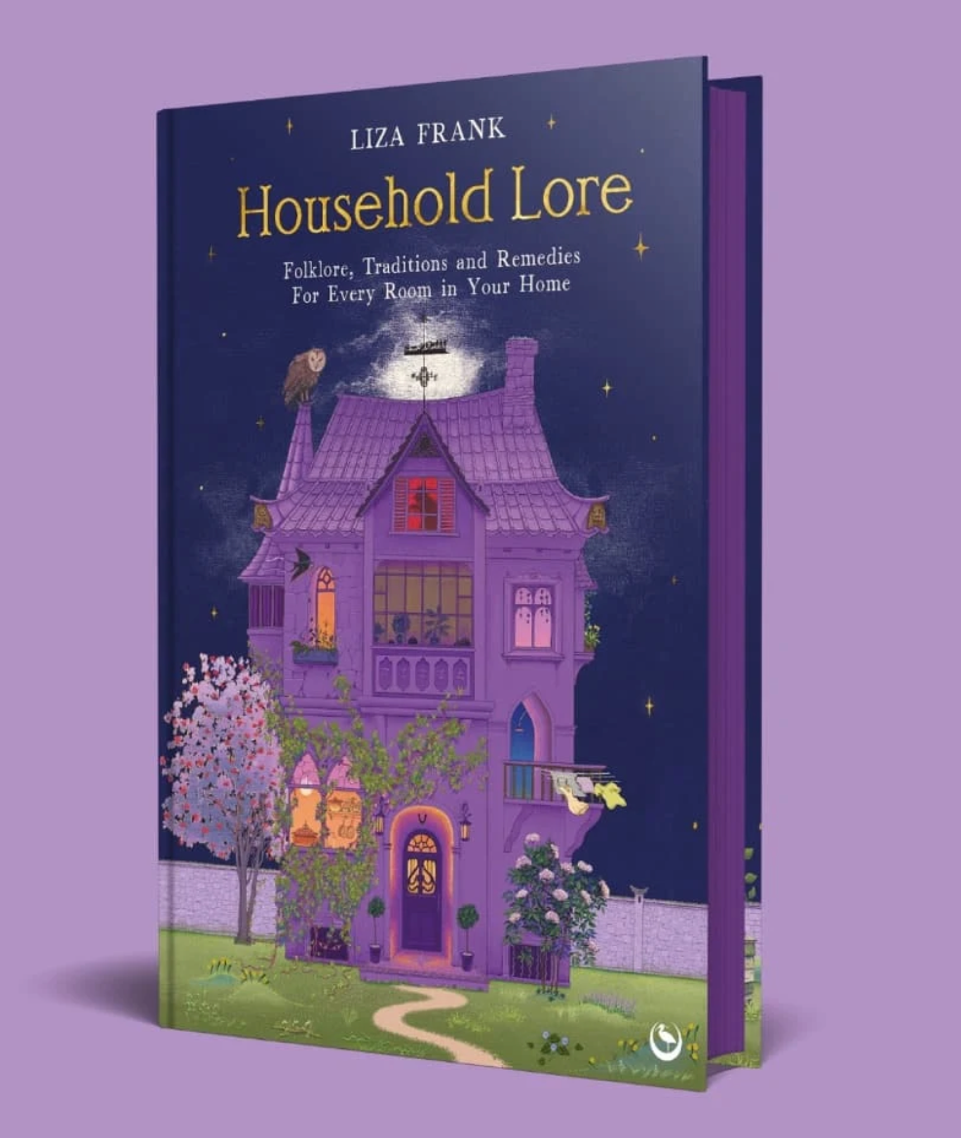
Before becoming a folklorist and writer, Liza Frank worked in theatre, film and photography. Her second book Everyday Folklore, an almanac for the ritual year (Murdoch Books, 2023) was based on her living by the rules of folklore for an entire ritual year. Her latest book Household Lore, Folklore, Traditions and Remedies for Every Room in Your Home (Watkins, 2025) uncovers the folklore (and monsters) that lurks in every corner of our homes. She has a Masters in Folklore Studies from University of Hertfordshire and in 2007, her slightly wild photographic exhibition was published as the book My Celebrity Boyfriend (Bloomsbury).
We had the pleasure of chatting to Liza about if her time in theatre ended in a love for folklore, whether returning to analogue is a good thing and asked for folklore agony aunt advice!
Northern Folklore Archive: Your career began in theatre; do you think those naturally inclined towards 'storytelling' end up falling in love with folklore? Did your time in theatre lead you towards folklore as a passion?
Some of my favourite books growing up were A Necklace of Raindrops by Joan Aiken, The Chronicles of Prydain by Lloyd Alexander, anything by Alan Garner and the Narnia books by CS Lewis, all of which have both strong storytelling and a lot of folklore. But when I was reading them, I didn’t know what “folklore” was, I was just after a cracking story that had a bit of magic and weirdness mixed in.
And theatre is basically magic and weirdness too. I stage managed, but was once roped in to play Tinkerbell in the West Yorkshire Playhouse’s production of Peter Pan in the mid-nineties. And when I say played, I mean I was stood under the nursery window dressed in black, wearing a balaclava and waving around a 30ft fishing pole with a light on the end of it. Magic and weirdness.
I started paying more attention to folklore when I began writing. The books I read as a child were the kinds of stories I wanted to tell as an adult. Theatre certainly played a part in me wanting to continue living a life of magic and weirdness, but I think my love of folklore was instilled in me by my childhood reading habits.
Folklore is integral to storytelling, whether it’s using conscious motifs such as mermaids, ensorcelled swords or witches, or including the magicless rituals, traditions and routines we perform every day such as wearing black to a funeral, how we make our morning coffee or who is in charge of the remote control. So yes, ‘those naturally inclined towards 'storytelling' end up falling in love with folklore’ is a good premise because folklore provides templates, ideas and structure to storytelling. However, whether storytellers are conscious of the types of folklore they are including in their work, is another matter altogether.
Your 2020-21 project 'Everyday Lore' had you looking at ways of incorporating folklore, tradition and superstition into your everyday life. What lessons or positive habits did this project bring you?
Discipline! The Everyday Lore Project was about me living for an entire ritual year by the rules of folklore. Every day I would research and perform folklore attached to the date, the day, the month, the season or if something opportune came up, and then in the evening to keep me honest, I would write about what happened on my website.
That’s 366 relentless posts, plus extras, without a day off. Not to mention, I did this in 2020-2021. I was already over two months in before we were locked down so I couldn’t, as I’d hoped, just pop out to a fire festival or catch some mummers to fill my quota, I had to recreate the ritual year in my home. But I never missed a day and that sense of discipline, and the organisation needed to support it, left me in good stead to write the resulting book Everyday Folklore, an almanac for the ritual year (Murdoch Books, 2023) and research and write my latest book Household Lore, Folklore, Traditions and Remedies for Every Room in Your Home (Watkins 2025).
But the project also brought into focus what sort of folklore practice I enjoy. I loved trying all the material culture challenges like embroidery, tatting and knotting; I was mostly unsuccessful with my ritual year baking, but it was such fun to try; love divinations were always a hoot and reacquainting myself with how nature unfolds throughout the year was an absolute joy.
I've spoken to a few people about how folklore seems to be a nice way for folk to lean back into more 'analogue' times, reconnecting with themselves and ditching modernity a little, do you find that your Everyday Lore project helped you to do this? And would harkening back to a more analogue society be a good thing?
Yes and no! During the project, I felt I needed to prove what I’d been up to, so a lot of the time I never got into an analogue flow as I was documenting my activities with photographs, video and sound recordings, let alone the multiple evenings spent swearing at my computer trying to upload my posts.
We are where we are with technology, that box can’t be closed now, but I do think we need to regularly experience life without screens. An easy win is to take a short walk every day near something green, even if it’s just a single tree or a small hedge, and observe the minutiae of how it changes with the seasons. Most plants (if not all) have some kind of folklore belief attached to them so investing in a book of plant folklore to take on your travels will bring another dimension to your walk, as well as giving you a break away from technology.
Besides, nothing quite cheers me up like seeing the first crocuses of spring, eating a handful of blackberries and finding a conker or two.
You’ve recently published a new book Household Lore, Folklore, Traditions and Remedies for Every Room in Your Home that explores all kinds of folklore that’s tucked away in front of our noses. What made you switch from hands on ritual year folklore to a more contained look at the folklore around us?
I felt that I’d probably done as much as I could with ritual year folklore, but having said that each chapter ends with a Dates For Your Diary section and in the kitchen chapter there’s a whole spiel on ritual year baking, so I guess I didn’t let go of it completely.
I wanted to write a book on folklore of the home because folklore isn’t just something that happens to other people in other places, it’s all around us especially in spaces already full of rituals, routines and customs like our homes. Plus it’s just so fascinating! I found out folklore like there’s specific etiquette you have to employ when talking with ghosts, or how the kitchen is full of things you can use for divination like rice, bananas, bay leaves, basil leaves and black beans, or the myriad ways you can protect your home from evil influence from planting a rowan tree by your front door, to smearing your door hinges with garlic, to popping a pot of rosemary on your kitchen windowsill.
It all started with me discovering that the bobbins on the end of window blind pulls were originally shaped like acorns to deflect lightning and my curiosity grew from there. Just the other day I came across the reason for ceiling roses – to be under the rose, or sub rosa, meant to be sworn to secrecy (from the myth of Eros and Harpocrates). So ceiling roses are an architectural echo of when actual roses were suspended above meeting tables or attached to the ceilings of rooms where confidential information was discussed. You see, fascinating!
I just absolutely love your work as the Folklore Agony Aunt! To give readers a taste of the sort of advice you may give, let me throw a hypothetical at you... "Help! I'm having self-esteem issues! What advice can you give for gaining a little confidence?" (Unrelated to myself, sometimes I fear I suffer from having too much audacity!)
Dear Northern Folklore Archive
Thank you for your kind words and I feel your pain. Deeply. But enough about my Imposter Syndrome and back to you.
There are many types of self-esteem issues, for example, the fear of appearing like an idiot. Should you be about to take an exam it is advised that you sleep with a helpful textbook beneath your pillow to absorb all the information overnight. Likewise if you’re about to be introduced to an important person, swap the textbook for a dictionary and it’s said you’ll have all the vocabulary you’ll need to make an impression (good or bad is entirely up to you).
The ancient Greeks were partial to nibbling on a borage leaf or two to bolster their confidence. Meanwhile in ancient Rome soldiers believed that thyme would give them courage before going into battle and would regularly have baths filled with the stuff before heading out, sword in hand. Same was said for knights during the Crusades who were not unknown for having a thyme insignia embroidered into their tunics. Do be aware, however that both fairies and the souls of murdered men are also said to be keen on a bit of thyme, nestling, as it’s said they do, between the leaves.
To make yourself more attractive, you might want to wear a garland of camomile (also good for removing any errant curses), a sprig of yarrow in your buttonhole (also good for general confidence) or swig some wine infused with lemon balm (lemon balm also being good for attracting bees). And should you get lucky, to boost your sexual self-esteem, you may want to consider eating garlic, thought to promote stamina in the bedroom. But if the pong is too off-putting, you could always scoff down some chickpeas to pep up proceedings or pop a glass of salt water under your bed to absorb any negativity.
And finally, if you have no confidence in your butter making skills, just procure a dead man’s hand and swirl it about your churn nine times while repeatedly crying ‘gather’ and you should be all good.
That being said, self-esteem is a tricky thing. At least if you carry a crust of bread in your pocket to attract good fortune, you’ll always have something to chew on if it goes tits up.
Good luck! The Folklore Agony Aunt
Have a problem? Are you perching on the horns of a dilemma? Frustrated by conventional wisdom? Let the Folklore Agony Aunt bring a different perspective. Click here to tell her all about it.
Lastly (and I'm asking this to everyone) one of the Northern Folklore Duo is a huge film fan, so this question is purely for him... what is your favourite film?!
This is such a cruel question! But the first flick that came to mind was Blazing Saddles written and directed by Mel Brooks. The man is a genius.
We had so much fun talking to Liza. Her enthusiasm is SO infectious, and I just about died at our Folklore Agony Aunt response… I have so many ways of gaining confidence now! To connect with Liza, find her @lilithepunk on Bluesky and Instagram and to read more about what she’s up to visit www.liza-frank.com and subscribe to her blog.
Community Categories
Quick click to another article from the categories below.
- Artist
- Printmaker
- Cornwall
- Folk Music
- Folk Workshops
- Foraging
- Foraging Folklore
- zoe eliza
- Folklore Art
- Emily Wild
- Interview
- Blood Stone Books
- Folklorist
- Pickled Pennies Prints
- Musician
- Craig Hallam
- Wycombe
- Morgana Weeks
- Poet
- Plantlore
- Corn Dollies
- Linocut
- YouTube
- Vic Jay Art
- Ros Lorimer
- Linocut Printer
- Illustrator
- Sasha Spyrou
- Author
- Wyrd Wycombe
- Minifis Oddities
- Stevyn Colgan
- Emma Kathryn
- Filmmaker
- Scared in the Name of Science
- Liza Frank
- Ciara Armstrong
- artist
- elisabeth flett
- Events
- Folklore
- Historian
- North East Folklore Society
- Witch
- Folklore Agony Aunt
- musician
- Will Matthews
- HerOrangeCoat
- Wabi Sabi Creations
- Podcast
- kirsty greenwood
- Publisher
- Nikki Bell
- Another Realm
- folk music
- North East
- Devon
- Kym Deyn
- writer
- Writer
- illustrator