Emma Kathryn: Author, Podcaster & Witch
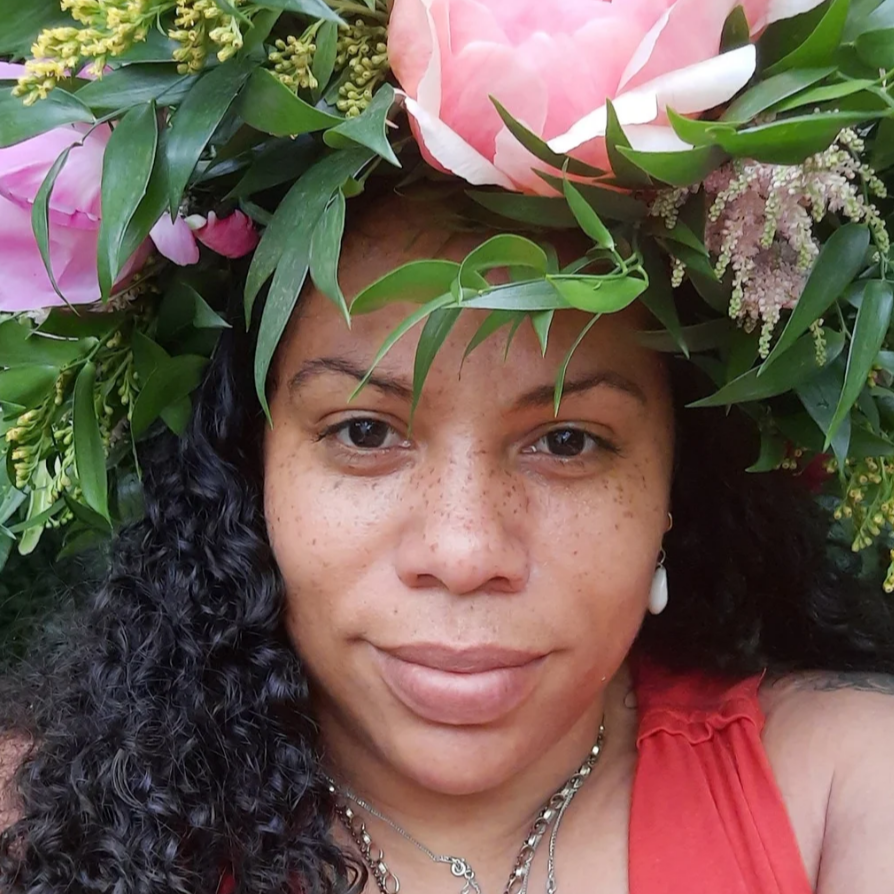
Writer of folk magical and spiritual practices, Emma Kathryn champions utilising witch customs and traditions in the modern age through her Wild Witch Podcast and various written works. Emma brings to light ancient customs, traditions and folklore stories that often don’t get enough visibility, particularly Caribbean folklore. Northern Folklore Archive had the joy of chatting to Emma about anchoring one’s self, encouraging those new to folk to join our community and the importance of navigating today’s world with joy in our hearts.
Northern Folklore Archive: You are a host for the Wild Witch Podcast; do you feel that this creative project brings you closer to the folk community?
Emma: Absolutely! I think the good thing about podcasts as a medium for discussion is that they naturally lend themselves to creativity and the fluidity of discussion, helping people to feel connected and engaged.
The folk community love a good discussion, and so hosting the podcast means that I can engage with them in a meaningful way. And while I’m a writer and love the written word, there’s something a bit (or rather quite a bit) different about hearing someone speak.
There’s so much nuance that can get lost in words, and as social creatures, we take so many cues from the tone and expression of voice. Also, podcasting is a way for me to ramble on about folk!
I've spoken quite a lot about people using folklore as a means to reconnect with themselves. Do you feel that writing and practicing folk/witch customs and traditions allows you to anchor yourself in our quite busy/hectic modern society?
Folklore and practice are a fabulous way of reconnecting with the self, and writing and practicing witch/folk practices is certainly a great way of doing that!
One of the things I love about folklore is that it addresses things as they truly are. Yes, the stories can often be fantastical, full of creatures and weird goings on, but underneath all of that, they truly embrace all of what it means to be human, the good and the bad and everything in between. And that doesn’t mean they are morality stories, though there may well be an element of this within them.
For me they allow us to explore how we are products of our own individual contexts and circumstances, and there isn’t necessarily a moral judgement attached to that. They allow us to embody empathy for ourselves and others and recognise that we are products of the world we live in, complete with all the idiosyncrasies.
I firmly believe practicing folk and witchy traditions and customs are a balm for the world we live in today, where we are all constrained by time, money and political goings on. It doesn’t mean we shy away from them or bury our heads in the sand when it comes to current global affairs, but instead gives the strength to carry on with a little bit of joy in our hearts.
And that’s without even going into how empowering they can be, the taking back of our own power and creativity, of allowing us to know where we come from and where we want to go. In a fast paced, capitalistic world where the focus always seems to be on busyness and growth, it almost seems like a radical concept.
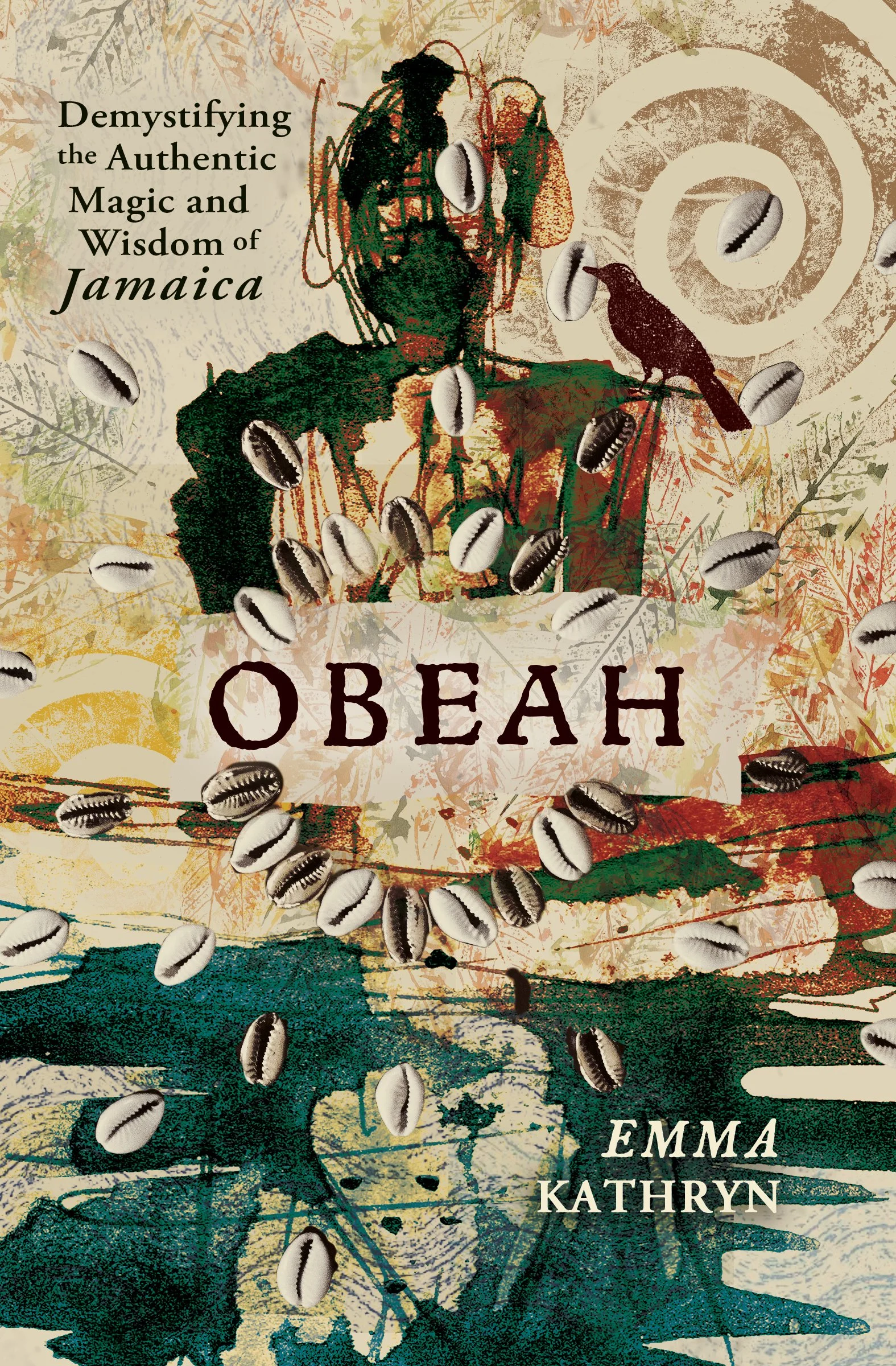
You offer a variety of online courses and workshops, including Tarot for Beginners and Obeah in Literature, do you hope that these will allow people who perhaps are new to exploring folklore to feel more involved in the folk community?
Yes, and that’s often at the forefront of my mind. It’s so easy to feel imposter syndrome where you question what right you have to explore these things, that it can be hard to overcome, and so the biggest step can be just starting.
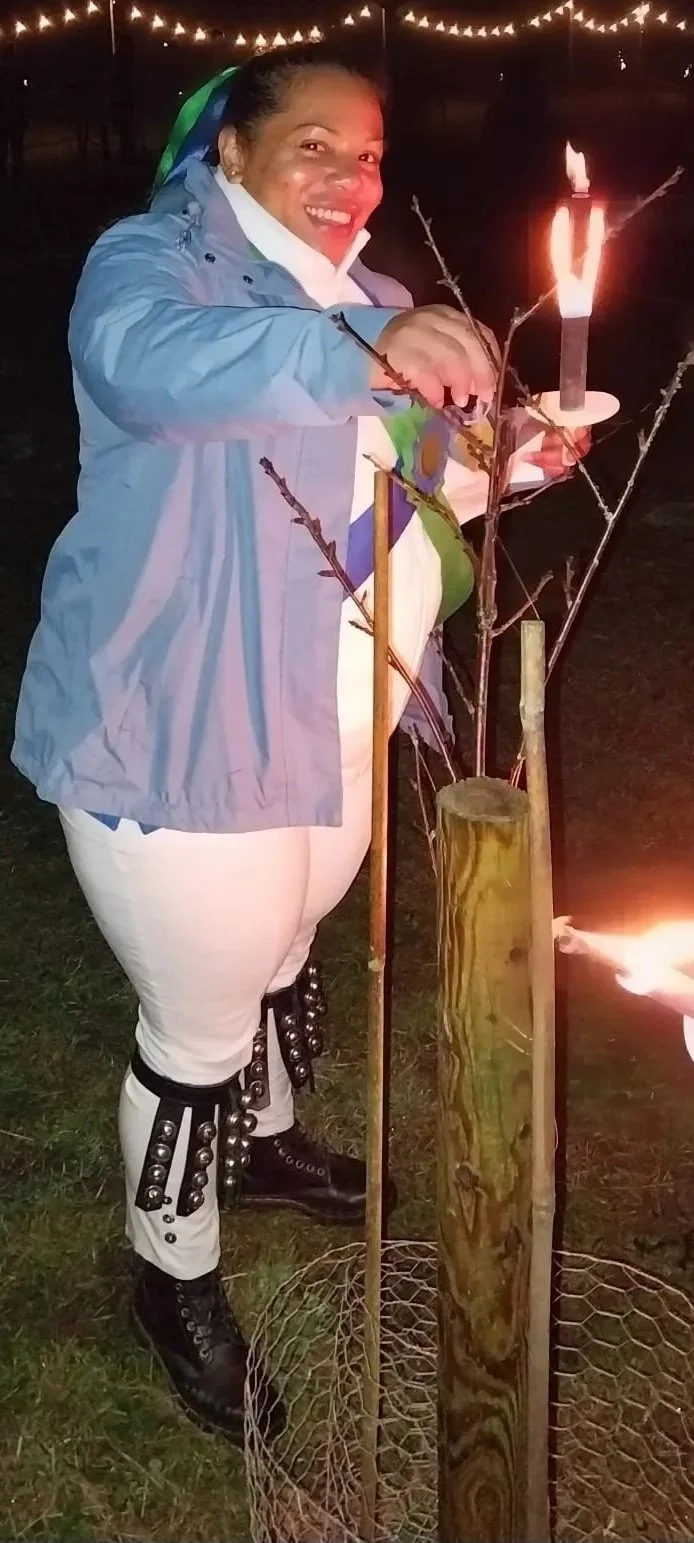
I’m also a Morris dancer, and though I’m a working class lass from a council estate and mixed race as well, I was often scared to take the plunge. I think it’s only as I’ve gotten older that I’ve been able to throw off the shackles of not caring and have fully embraced the idea that it is okay to try things without the pressure of thinking you have to be perfect, or know everything all at once. I sometimes think that people who do feel like that are making out!
And so it’s always been important to me that people feel comfortable enough to explore folk experiences. And sometimes it is just about trying things to see how they feel. I’m a teacher in an autism specific SEND school, and as I always tell my students, you don’t know if you don’t try, and the same applies to folk. It’s about providing opportunities for people to explore, because we were all newbies at something once.
Are there any aspects of folklore that tend to be forgotten? Are there any that you'd like to champion more, and help push into popularity?
I love all things weird, which doesn’t really narrow it down much considering the wonderfully weird world of folk! I love all the obscure stories.
There’s so much about spirits and gods and goddesses of the land, so I love folklore that explores our connection with plants and trees, local places. As a woman with Jamaican heritage, I particularly love Caribbean folklore. My father came to Britain as a boy during the windrush era, and while it’s easy to think of the Caribbean as some faraway place, actually, there is a link between Britain and those islands, and the truth is one of those things that is a mixture of grief, sadness but also of new beginnings, and these things seem to me to be at the very core of folklore.
Honestly, I could talk the back legs off a donkey about duppy stories and Obeah! So really I think I’m pretty interested in those things that tend to be overlooked or forgotten.
Lastly (and I'm asking this to everyone) one of the Northern Folklore Duo is a huge film fan, so this question is purely for him... what is your favourite film?
Ah, just one? An almost impossible task indeed! So with that said, I’m gonna cheat and give you two! Is it a cliché if my first one is The Wicker Man, the original one and not the terrible Nicholas Cage version? I just love it! I would totally go and live on Summerisle!
And my second choice has to be The VVitch. I know a lot of people didn’t really ‘get’ it, but for me it captured everything about folklore and practices that I love, highlighting the hypocrisy of society and people who are pious on the outside but less scrupulous on the inside. It shows that when struggle gets into the mix, and poverty and ruin almost certain, people will do what they need to do.
But also, it shows a young woman coming into her own power and self agency, the realisation her parents are a bit shit (or maybe just as human and unperfect as everyone else), the patriarchal society and poverty. Also, Black Philip, nuff said! In fact, I’m trying to convince my husband that a black he goat will make the perfect pet!
Now you’ve given me ideas… do you think I’d be allowed a Black Phillip in my rented flat?!
We had such a fun time chatting to Emma, her enthusiasm is so infectious! If you’d like to follow Emma, she’s on Instagram: @emmakathrynwildwitch.
Community Categories
Quick click to another article from the categories below.
- Artist
- Printmaker
- Cornwall
- Folk Music
- Folk Workshops
- Foraging
- Foraging Folklore
- zoe eliza
- Folklore Art
- Emily Wild
- Interview
- Blood Stone Books
- Folklorist
- Pickled Pennies Prints
- Musician
- Craig Hallam
- Wycombe
- Morgana Weeks
- Poet
- Plantlore
- Corn Dollies
- Linocut
- YouTube
- Vic Jay Art
- Ros Lorimer
- Linocut Printer
- Illustrator
- Sasha Spyrou
- Author
- Wyrd Wycombe
- Minifis Oddities
- Stevyn Colgan
- Emma Kathryn
- Filmmaker
- Scared in the Name of Science
- Liza Frank
- Ciara Armstrong
- artist
- elisabeth flett
- Events
- Folklore
- Historian
- North East Folklore Society
- Witch
- Folklore Agony Aunt
- musician
- Will Matthews
- HerOrangeCoat
- Wabi Sabi Creations
- Podcast
- kirsty greenwood
- Publisher
- Nikki Bell
- Another Realm
- folk music
- North East
- Devon
- Kym Deyn
- writer
- Writer
- illustrator